Most tuna salad fails in one of two directions. It’s watery and loose because the tuna never got drained properly, or it’s a flat, pasty mush because nothing in the bowl has any crunch left. Neither problem comes from bad tuna. It comes from ratio and a couple of steps most recipes skip over.
Table of Contents
This version leans on well-drained tuna, a moderate amount of mayonnaise, and enough diced celery and onion to keep every bite from collapsing into paste. It’s also genuinely fast: ten minutes of hands-on work, then a short chill to let the flavors settle.
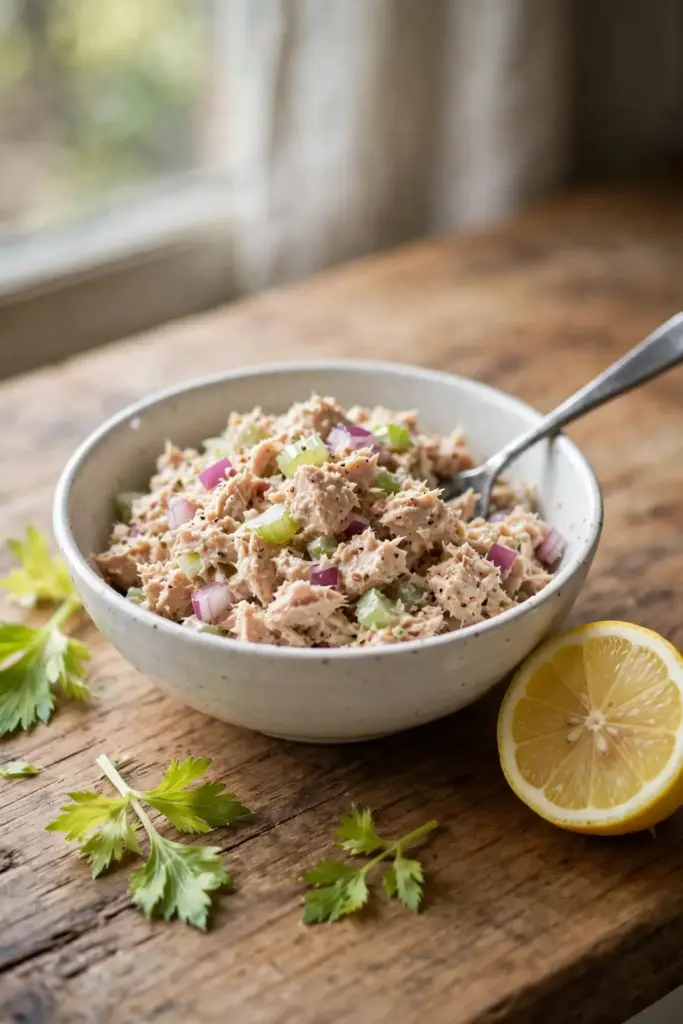
Tuna salad is a cold, no-cook dish made by folding well-drained canned tuna with mayonnaise, diced celery, onion, and a splash of lemon juice or mustard for balance. It comes together in one bowl with a fork, no stovetop needed.
Why You’ll Love This Tuna Salad
- Ten minutes of hands-on time, no cooking involved.
- Holds its shape on a fork or a slice of bread instead of sliding off in a watery mess.
- The celery and onion give it real texture, not just a soft, uniform bite.
- Keeps well in the fridge for a few days, so it’s an easy thing to have on hand for lunches.
Ingredients
- 2 (5-ounce) cans tuna packed in water, drained well (about 2 cups drained tuna)
- 1/3 cup mayonnaise
- 2 stalks celery, finely diced (about 1/2 cup)
- 3 tablespoons red onion, finely minced
- 1 tablespoon fresh lemon juice
- 1 teaspoon Dijon mustard
- 1/4 teaspoon black pepper
- Salt, to taste
Ingredient notes:
Tuna. Water-packed tuna is leaner but holds more liquid, so it needs a firmer drain. Oil-packed tuna is richer and a little more forgiving on texture, since the residual oil helps bind the salad instead of watering it down.
Mayonnaise. This is what makes the salad hold together. Too little and it stays crumbly and dry; too much and it turns soupy and hides the tuna. A full-fat mayo gives more body than a light or low-fat version, which tends to separate.
Celery. The crunch that keeps this from turning into a uniform paste. Dice it small so it distributes through every bite instead of showing up as one big crunchy chunk.
Red onion. Adds a sharp bite that cuts through the richness of the mayo. Mince it fine, or soak it in cold water for five minutes first if you want a milder version.
Lemon juice and Dijon mustard. Together they add the acidity and tang that plain mayo doesn’t have on its own. Skip both and the salad tastes flat no matter how good the tuna is.
Recipe Timing
- Prep time: 10 minutes
- Chill time: 15 minutes
- Total time: 25 minutes
- Servings: 4
- Difficulty: Easy
- Cuisine: American
- Course: Lunch, Salad
Substitutions
Mayonnaise → Greek yogurt. Swapping half the mayo for plain Greek yogurt cuts richness and adds protein, with a tangier, lighter result. A full swap works too, but the salad will taste noticeably more sour and slightly less creamy.
Celery → cucumber or bell pepper. Both add crunch, but cucumber holds more water, so pat it dry after dicing or the salad will loosen up faster than usual.
Red onion → shallot or green onion. Either gives a milder, less sharp bite than red onion. Use about the same amount.
Dijon mustard → yellow mustard. Yellow mustard is sweeter and less sharp. It works, but the salad loses some of the tang Dijon adds.
Lemon juice → white wine vinegar. Vinegar is more acidic than lemon juice, so start with half the amount and adjust to taste.
Allergen and Dietary Disclosure
This recipe contains fish (tuna) and egg (in the mayonnaise). Fish is the base of the dish, so there’s no substitute that keeps this recipe recognizable as tuna salad. For the egg in the mayonnaise, an egg-free or vegan mayonnaise can be swapped in at the same quantity if needed.
Ingredient brands and formulations vary, and cross-contamination is possible depending on how products are manufactured and handled in your kitchen. If you or someone you’re feeding has a fish or egg allergy, check product labels directly and use your own judgment rather than relying on this recipe as a guarantee of safety.
Step-by-Step Instructions
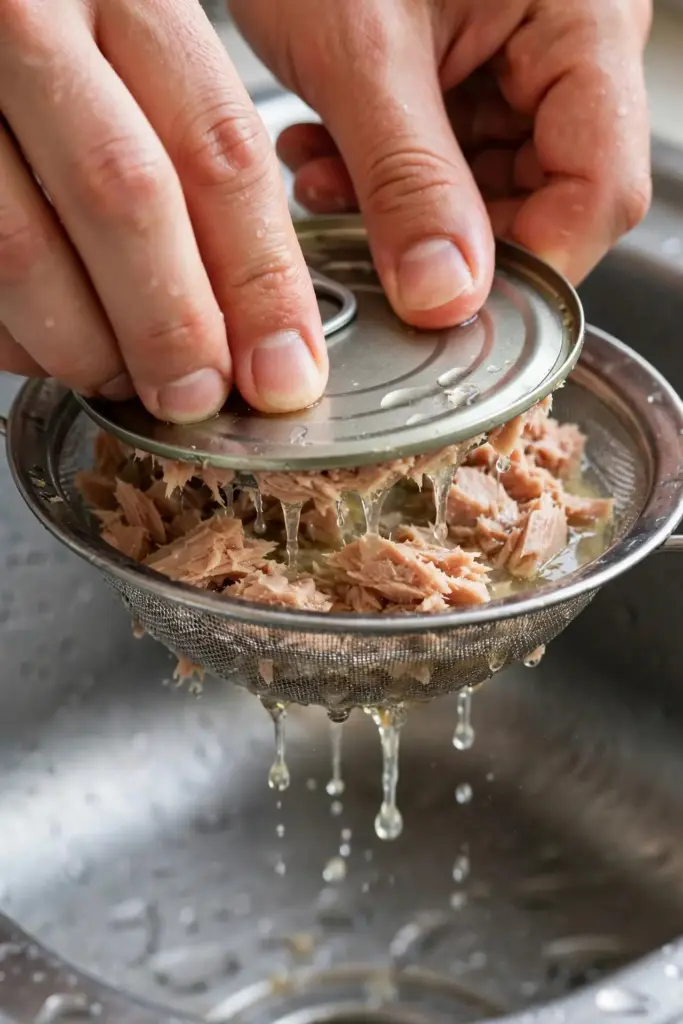
- Drain the tuna. Open both cans and press the lid firmly against the tuna to force out as much liquid as possible, or tip the tuna into a fine-mesh strainer and press it with the back of a spoon. It’s ready when it no longer drips and feels noticeably dry to the touch. This step decides whether the finished salad is creamy or watery. Even a couple of tablespoons of leftover liquid will thin out the mayo later.
- Flake the tuna. Transfer the drained tuna to a mixing bowl and break it apart with a fork until no large chunks remain, just even, loose flakes.
- Add the celery and onion. Add the diced celery and minced red onion directly to the bowl with the tuna.
- Add the dressing ingredients. Add the mayonnaise, lemon juice, Dijon mustard, and black pepper to the same bowl.
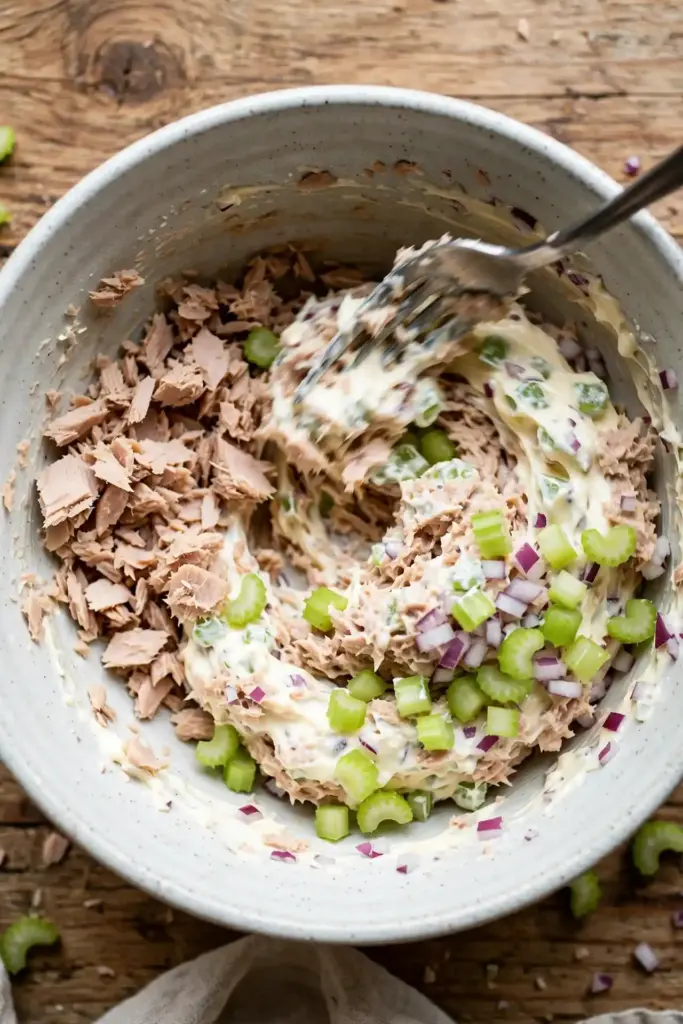
- Fold everything together. Using a fork or spatula, fold gently until the tuna is coated and there are no dry streaks or loose pools of mayo left in the bowl. The mixture should hold its shape when pressed against the side of the bowl with the back of a fork. Stirring hard at this stage breaks the tuna down further and pushes the whole salad toward mush. Folding just until combined keeps some texture in the flakes.
- Taste and season. Taste before adding salt, since canned tuna is often salted already. Adjust salt and pepper until the flavor feels balanced rather than one-note.
- Chill before serving. Cover and refrigerate for at least 15 minutes. A short rest lets the celery and onion mellow into the mayo, so the flavors taste blended instead of like separate ingredients sitting next to each other.
Key Tips
- Drain harder than feels necessary. A quick tip and shake isn’t enough. Press the tuna with the can lid or a strainer until it stops dripping.
- Fold, don’t stir. Vigorous stirring breaks the tuna into a paste faster than you’d expect. A gentle folding motion keeps some texture in the flakes.
- Taste before you salt. Canned tuna and mayo both carry sodium already, so add salt at the end, not the start.
- Dice the crunch ingredients small. Large chunks of celery or onion end up as occasional bites instead of texture throughout the salad.
- Let it chill before serving if you have the time. Fifteen minutes in the fridge makes a real difference in how blended the flavors taste, even though the salad is technically ready to eat right away.
Common Mistakes and Troubleshooting
The salad turns out watery or soupy. Cause: leftover liquid from the tuna can that never got pressed out. Fix: drain the tuna hard before flaking it, using the can lid or a strainer, and don’t skip this step even if you’re in a hurry.
The texture is mushy with no bite. Cause: over-stirring the tuna, or leaving out anything crunchy. Fix: fold gently instead of stirring vigorously, and don’t skimp on the celery and onion.
It tastes bland even with plenty of mayo. Cause: mayo alone doesn’t bring acid or seasoning on its own. Fix: add the lemon juice and mustard, and taste before deciding it needs more mayo. Often it needs more acid or salt instead.
The onion overwhelms every bite. Cause: onion pieces cut too large, or too much of it for the amount of tuna. Fix: mince it fine, or soak the diced onion in cold water for five minutes to soften its bite before adding it.
Variations
Classic egg tuna salad. Fold in two chopped hard-boiled eggs along with the celery and onion. This makes the salad heartier and adds richness, though it does add another allergen to account for if egg wasn’t already a concern.
Curried tuna salad. Add 1/2 teaspoon curry powder and 2 tablespoons golden raisins in place of the Dijon mustard. The curry powder brings warmth and color, and the raisins add a sweet contrast to the savory tuna.
Greek yogurt tuna salad. Replace half the mayonnaise with plain Greek yogurt for a tangier, lighter version with less richness per bite.
Diner-style tuna salad. Stir in 1 tablespoon sweet pickle relish along with a small pinch of paprika. This leans sweeter and closer to what you’d find at an old-fashioned lunch counter.
Serving Suggestions
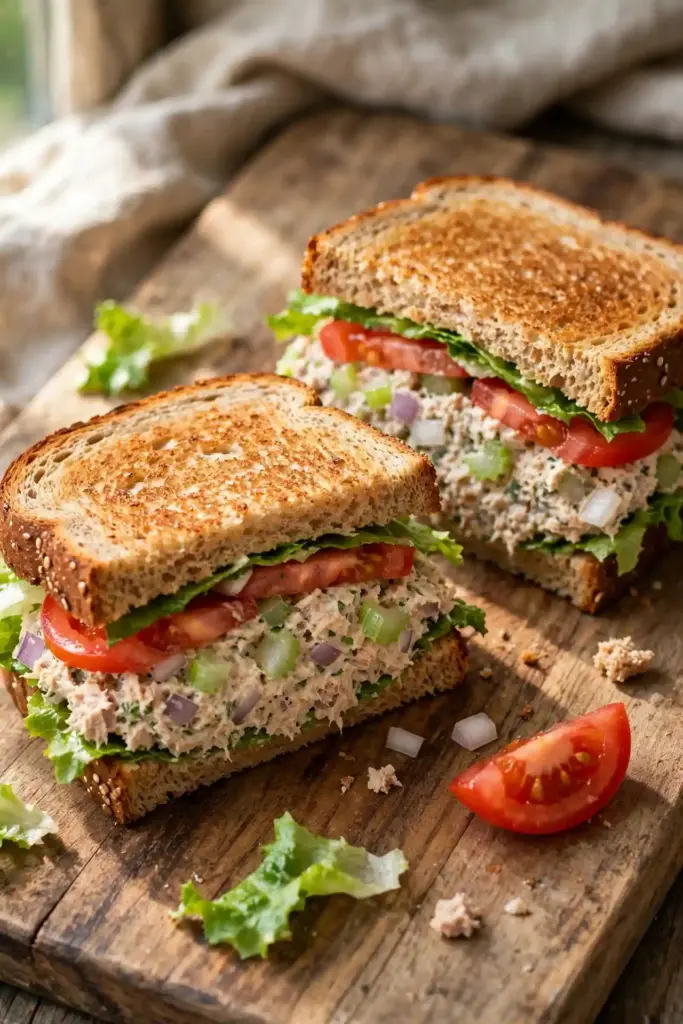
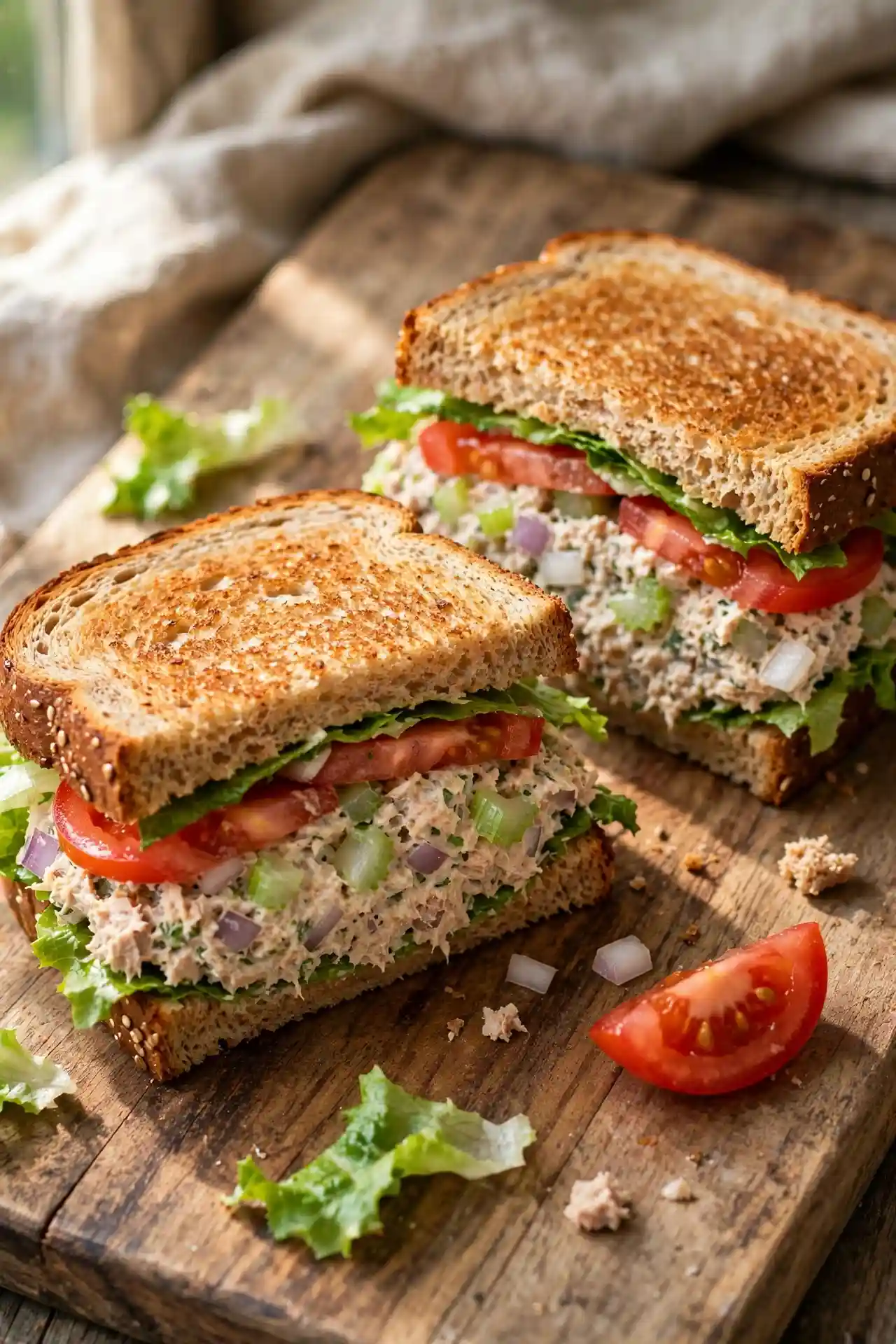
- Classic sandwich on toasted whole wheat bread with lettuce and sliced tomato.
- Scooped over a bed of mixed greens for a lighter, lower-carb lunch.
- Piled onto crackers for a quick snack (see our [Homemade Buttery Crackers recipe] for a from-scratch option).
- Stuffed into a halved, pitted avocado.
- Wrapped in a large lettuce leaf or a tortilla for something handheld without the bread.
Storage, Freezing, and Make-Ahead
Storage. Keep tuna salad in an airtight container in the fridge, in the coldest part rather than the door, for 3 to 4 days. Per general USDA food safety guidance, mayonnaise-based salads like this one shouldn’t sit out at room temperature for more than 2 hours, or 1 hour if the room is above 90°F.
Freezing. Skip it. Mayonnaise separates when frozen and thawed, so the texture turns grainy and watery no matter how well it’s wrapped.
Make-ahead. The tuna, celery, and onion can be prepped and stored separately up to a day in advance. Once everything is mixed with the mayo, it’s best eaten within the first two days for the best texture, though it stays safe to eat through day four if refrigerated properly.
Nutrition Information
Per serving (about 1/2 cup, based on 4 servings):
- Calories: 190
- Protein: 20g
- Carbohydrates: 2g
- Fat: 11g
- Fiber: 0g
- Sugar: 1g
- Sodium: 400mg
These are estimates calculated from typical ingredient values. Actual numbers vary with brands, cuts of tuna, and portion size. If you’re tracking intake closely, calculate the numbers yourself using your specific ingredients.
Frequently Asked Questions
How long does tuna salad last in the fridge? Properly stored in an airtight container, tuna salad keeps for 3 to 4 days in the refrigerator. Discard it if it develops an off smell or the texture turns slimy.
Can I make tuna salad ahead of time? Yes. You can prep the tuna, celery, and onion up to a day ahead and store them separately, then mix in the mayo closer to serving. Fully mixed, it holds well for a day or two.
Why is my tuna salad watery? It’s almost always leftover liquid from the tuna can. Press the tuna firmly with the can lid or run it through a fine-mesh strainer before mixing, rather than just tipping and shaking the can.
Can I use fresh cooked tuna instead of canned? Yes. Poach or sear a tuna steak, let it cool completely, then flake it and use it the same way as canned. It will taste less salty than canned tuna, so adjust seasoning accordingly.
What can I use instead of mayonnaise? Plain Greek yogurt works as a partial or full swap for a tangier, lighter result. Mashed avocado is another option, though it changes the color and adds a more distinct flavor of its own.
Does tuna salad freeze well? No. The mayonnaise separates once thawed, leaving a grainy, watery texture that doesn’t recombine well no matter how much you stir it.
What’s the best type of canned tuna for tuna salad? Albacore tuna has a milder flavor and firmer texture, while light tuna (usually skipjack) has a stronger, more fishy flavor and softer flakes. Either works; it comes down to preference for taste and texture.
Conclusion
Tuna salad doesn’t need many ingredients to be good, but it does need the tuna properly drained and the mixing kept gentle. Get those two things right, along with enough celery and onion to keep some texture in every bite, and the rest of the recipe is just assembly. Skip either one, and no amount of extra mayo or seasoning fixes a salad that’s already watery or mashed to paste.
Classic Tuna Salad
Ingredients
Method
- Drain the tuna by pressing it firmly with the can lid or through a fine-mesh strainer until it stops dripping.
- Flake the drained tuna in a mixing bowl with a fork until no large chunks remain.
- Add the diced celery and minced red onion to the bowl.
- Add the mayonnaise, lemon juice, Dijon mustard, and black pepper.
- Fold gently until combined and the mixture holds its shape when pressed with a fork.
- Taste and season with salt as needed.
- Cover and chill for at least 15 minutes before serving.