Most lemon cake recipes taste like vanilla cake with a spoonful of zest stirred in. The zest gives you aroma, but not much actual tang, so the cake smells like lemon and tastes like not much. The other common failure is dryness, usually from packing flour into the measuring cup or pulling the cake at the timer instead of the toothpick.
Table of Contents
This one fixes both. Fresh juice goes into the batter and the glaze, buttermilk keeps the crumb tender, and the cake bakes in a Bundt pan that turns a glossy glaze into a shell instead of a puddle.
What actually makes a lemon cake taste like lemon, not just smell like it? Zest alone isn’t enough. You need lemon juice in the batter for real tartness, and a glaze applied after baking, since baking cooks off some of the juice’s brightness before it ever hits your tongue.
Why You’ll Love It
- Zest and juice both go into the batter, so the flavor holds up after an hour in the oven instead of fading to background.
- Buttermilk’s acidity reacts with the baking soda for lift, and keeps the crumb tender rather than dense.
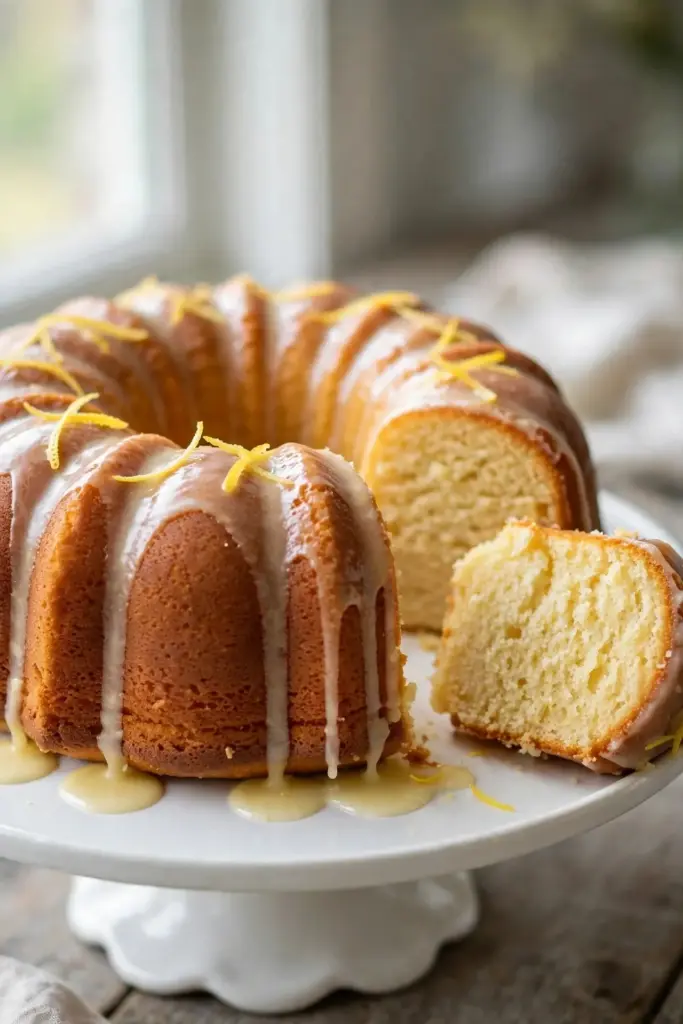
- The glaze sets into a thin, slightly crackable shell once it dries, so the cake can travel to a potluck without smearing.
- One bowl for the cake, one for the glaze. No layers to stack or fillings to spread.
Ingredients
For the cake:
- 3 cups (375g) all-purpose flour, spooned into the cup and leveled off, not scooped and packed
- 1 teaspoon baking powder
- 1/2 teaspoon baking soda — this needs the buttermilk’s acidity to activate, so don’t swap in plain milk without adding an acid
- 1/2 teaspoon fine salt
- 1 cup (2 sticks) unsalted butter, softened to room temperature
- 2 cups granulated sugar
- Zest of 3 large lemons, about 2 tablespoons (zest the lemons before you juice them)
- 4 large eggs, room temperature
- 1 teaspoon vanilla extract
- 1 cup buttermilk, room temperature
- 1/4 cup fresh lemon juice, from the zested lemons
For the glaze:
- 1 1/2 cups powdered sugar, sifted
- 3 to 4 tablespoons fresh lemon juice
Recipe Timing
- Prep time: 20 minutes
- Cook time: 60 minutes
- Cooling time: 90 minutes (the cake must cool fully before glazing)
- Total time: 170 minutes (2 hours 50 minutes)
- Servings: 12 slices
- Difficulty: Easy
- Cuisine: American
- Course: Dessert
Substitutions
- All-purpose flour can be swapped for a measure-for-measure gluten-free blend. The crumb turns a little denser and slightly gummy right at the center, so give it 5 extra minutes and rely on the toothpick, not the timer.
- Buttermilk can be replaced with 1 cup milk plus 1 tablespoon white vinegar or lemon juice, rested for 5 minutes before using. Real buttermilk still gives a slightly better rise and a more tender crumb.
- Unsalted butter can be swapped for salted; if you do, drop the added salt to a small pinch.
- Bottled lemon juice works fine in the glaze, where it’s mostly there for tartness and pourability. Skip it in the batter. Baked, it reads flatter than fresh, and the batter is where the flavor actually lives.
Allergen and Dietary Disclosure
This recipe contains eggs, dairy (butter and buttermilk), and wheat/gluten (flour).
- Egg-free: there’s no substitute that reliably holds up at this scale. A butter cake this size relies on eggs for both structure and moisture, so this isn’t a good candidate for an egg substitute.
- Dairy-free: a plant-based butter and a plant-milk-plus-vinegar buttermilk substitute (see Substitutions) will work, though the cake comes out a shade paler and less rich.
- Gluten-free: see the flour substitution above.
Cross-contamination risk and ingredient formulations vary by brand. If you’re baking for someone with a food allergy, check every label yourself rather than relying on this recipe alone.
Equipment
A 10 to 12 cup Bundt pan. The ridges are what give the cake its shape and the extra surface area that catches the glaze in the grooves instead of letting it run off flat. A plain round pan will work for flavor, but changes both the look and the bake time.
Grease the pan by hand with softened butter, working it into every ridge, then dust with flour and tap out the excess. Skipping this, or relying on cooking spray alone, is the most common reason a Bundt cake tears when it comes out of the pan.
Step-by-Step Instructions
- Heat the oven to 350°F. Grease and flour a 10 to 12 cup Bundt pan, working the butter into every ridge with your fingers.
- Whisk the flour, baking powder, baking soda, and salt together in a bowl until evenly combined. Set aside.
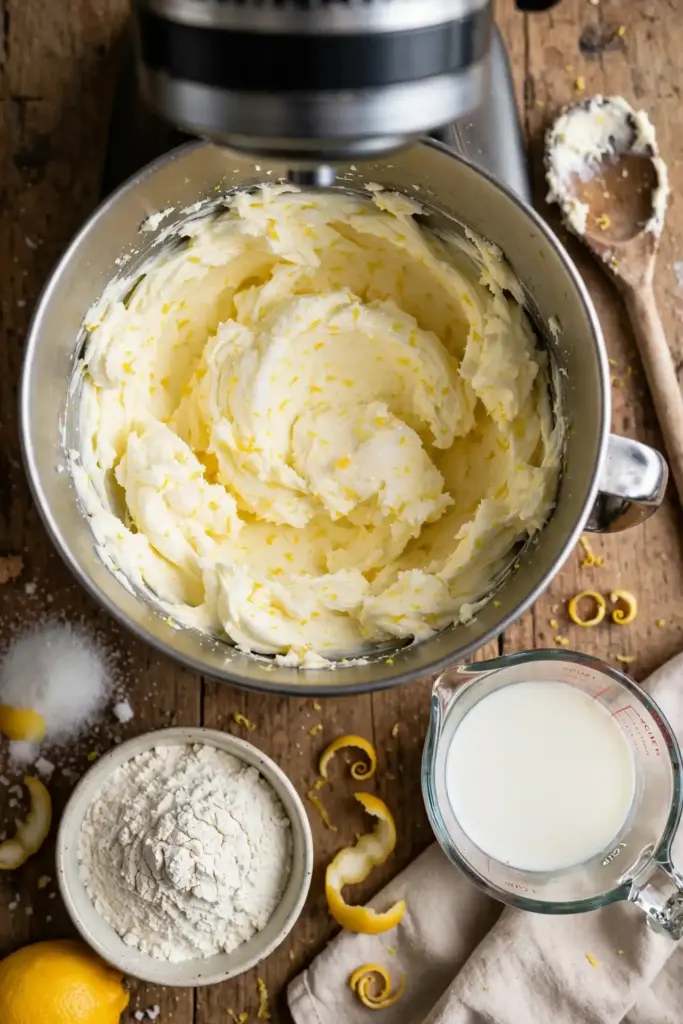
- Beat the butter, sugar, and lemon zest together on medium-high speed for 3 to 4 minutes, until the mixture is visibly paler and noticeably fluffier, not just combined.
- Add the eggs one at a time, beating about 15 seconds after each, then mix in the vanilla. The batter should look smooth and slightly glossy before you move on. Don’t taste the raw batter; it contains uncooked eggs.
- With the mixer on low, add the flour mixture in three additions, alternating with the buttermilk in two, starting and ending with flour. Mix just until the last streaks of flour disappear. This is where overmixing turns a tender crumb into a tough one.
- Fold in the lemon juice by hand with a spatula. The batter will loosen and may look faintly curdled for a moment. That’s the acid reacting, and it smooths out as you fold.
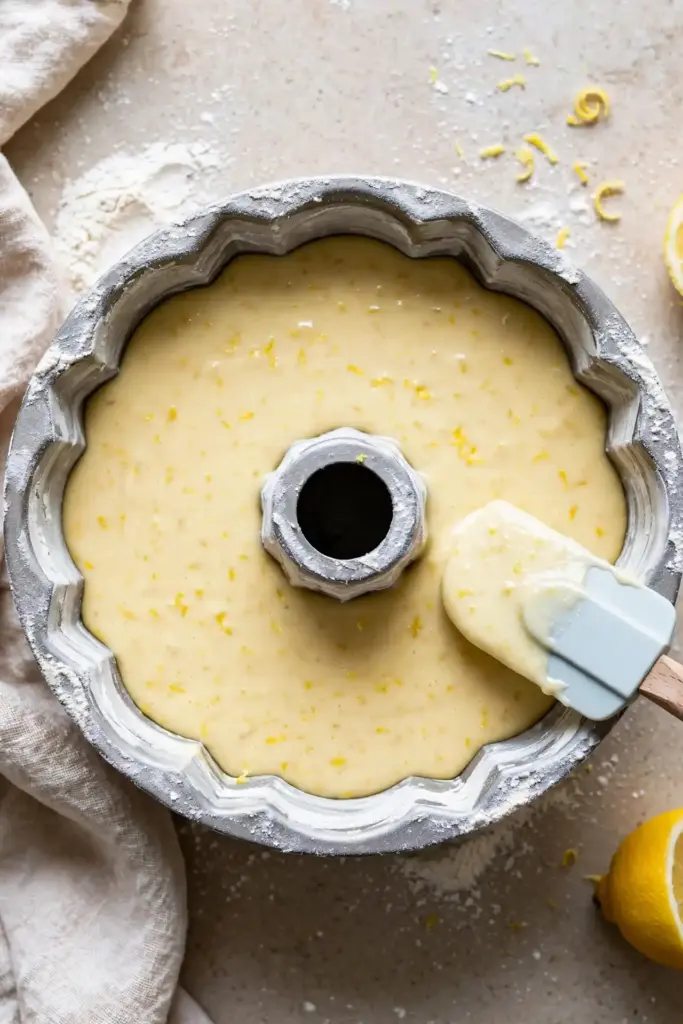
- Pour the batter into the prepared pan and smooth the top with the spatula. Bake for 55 to 65 minutes, until a toothpick inserted in the thickest part comes out clean or with a few moist crumbs, and the top springs back when you press it lightly.
- Cool the cake in the pan on a wire rack for 15 minutes, then invert it onto the rack to cool completely, about 90 minutes, before glazing. A warm cake will let the glaze run straight down the sides instead of setting on top.
Key Tips
- Zest the lemons before you juice them. Once a lemon is cut for juicing, zesting it cleanly is nearly impossible.
- Use room-temperature butter, eggs, and buttermilk. Cold ingredients don’t emulsify the same way, and the batter can look broken instead of smooth.
- Grease every ridge by hand. Even a nonstick Bundt pan has enough detail in the grooves to tear the cake if you rush this step.
- Give the cake the full cooling time before glazing, even if that means waiting an extra 20 minutes past when you think it’s ready. A glaze poured too soon slides down the sides and pools at the base instead of setting on top.
Common Mistakes and Troubleshooting
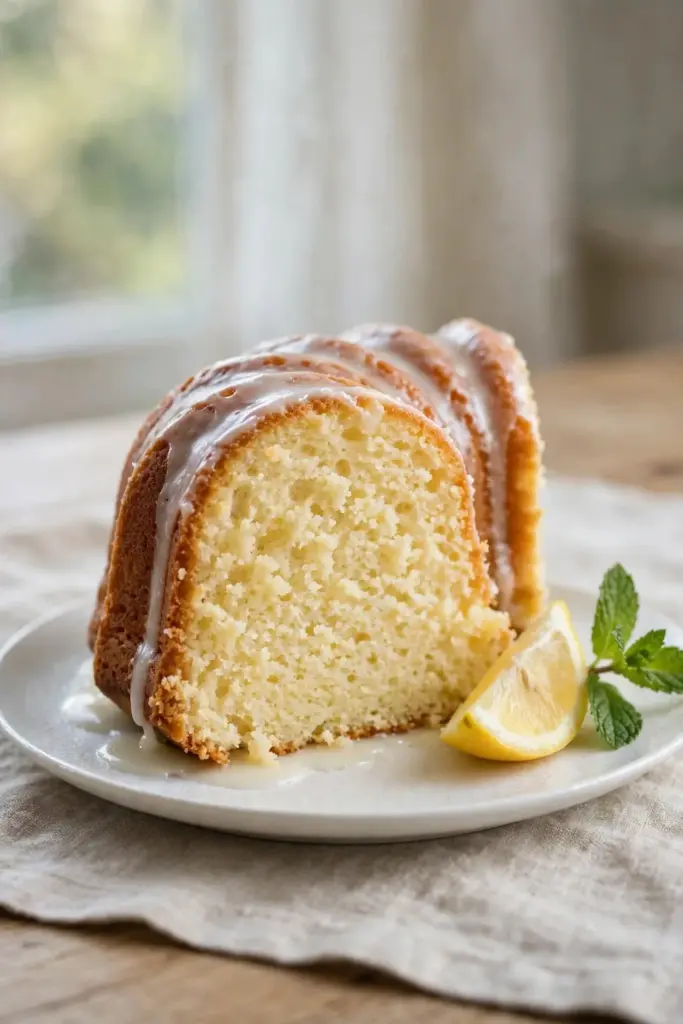
- Dry cake. Usually caused by packing flour into the measuring cup instead of spooning it in, which can add up to a quarter cup of extra flour without you realizing it, or by baking past done because the toothpick wasn’t checked until the timer went off. Check at the 55-minute mark, not the 65.
- Weak lemon flavor. Zest gives you aroma, not tartness. The juice in the batter and the glaze is what actually carries the flavor once the cake has baked.
- Cake sticks to the pan. Almost always incomplete greasing, especially in the ridges near the center tube. Butter and flour it by hand rather than relying on spray alone.
- Glaze slides off. The cake wasn’t fully cool. Bundt cakes hold heat in the center longer than they look like they do from the outside, so give the full 90 minutes.
Variations
- Lemon poppy seed: add 2 tablespoons poppy seeds to the dry ingredients.
- Lemon blueberry: toss 1 1/2 cups fresh blueberries in a tablespoon of flour and fold them into the batter right before pouring, which keeps them from sinking to the bottom.
- Lemon curd filling: split the cooled cake and spread a thin layer of lemon curd between the halves before glazing. This works better in a round layer cake than a Bundt, since a Bundt doesn’t split cleanly.
- Lemon cream cheese glaze: replace the plain glaze with softened cream cheese, powdered sugar, and lemon juice beaten together, for a thicker, tangier finish that sets less shiny.
Serving Suggestions
- With fresh berries and lightly whipped cream on the side.
- Alongside iced tea or coffee for an afternoon dessert (link to your Drinks category hub).
- As part of a spring or holiday dessert spread next to other cakes and bars (link to your Desserts category hub).
- Slightly warm with a scoop of vanilla ice cream, though letting it cool fully first still matters for the glaze to set.
Storage, Reheating, Freezing, and Make-Ahead
Storage: Once glazed, keep the cake covered at room temperature for up to 3 days, or in the fridge for up to a week. The glaze firms up a little when cold, which doesn’t hurt it.
Reheating: This cake isn’t really meant to be reheated. If you want a slice slightly warm, a few seconds in the microwave works, but the glaze will soften and lose its shine.
Freezing: Freezes well unglazed. Wrap the fully cooled, un-glazed cake tightly in plastic wrap and then foil, and freeze up to 3 months. Thaw at room temperature and glaze it the day you plan to serve it.
Make-ahead: Bake the cake up to a day ahead and store it unglazed, wrapped at room temperature. Make and pour the glaze the day you’re serving it, since it doesn’t hold its shine much past 24 hours.
Nutrition Information
Per serving (1 of 12 slices):
- Calories: about 390
- Protein: 5g
- Carbohydrates: 58g
- Fat: 16g
- Fiber: 1g
- Sugar: 40g
- Sodium: 210mg
These are estimates calculated from typical ingredient values. Actual numbers vary with specific brands, cuts, and how you slice the cake. If you’re tracking intake closely, calculate your own using your actual ingredients.
Frequently Asked Questions
Why is my lemon cake dry? The two usual causes are packing flour into the measuring cup instead of spooning it in, which adds more flour than the recipe calls for, and overbaking past the point the toothpick comes out clean. Start checking at the low end of the bake time listed.
How do I make lemon cake taste more lemony? Use both zest and fresh juice in the batter, not zest alone, and don’t skip the glaze. Zest carries aroma, juice carries actual tartness, and the glaze adds a final hit of brightness after baking softens the flavor in the crumb.
Can I use bottled lemon juice instead of fresh? In the glaze, yes, it works fine. In the batter, fresh is worth it. Bottled juice tastes noticeably flatter once baked, and the batter is where most of the cake’s flavor comes from.
Can I make this cake ahead of time? Yes. Bake it up to a day ahead and store it unglazed, wrapped at room temperature. Glaze it the day you plan to serve it so the glaze stays glossy.
Can I freeze lemon cake? Yes, but freeze it unglazed. Wrap the cooled cake tightly in plastic and foil and freeze up to 3 months, then thaw at room temperature and glaze right before serving.
Can I make this gluten-free? A measure-for-measure gluten-free flour blend works, though the crumb turns denser and slightly gummy at the center. Add about 5 extra minutes of bake time and rely on the toothpick rather than the clock.
Conclusion
The difference between a forgettable lemon cake and one people ask about is mostly two things: real lemon juice in the batter, not just zest, and letting the cake cool completely before the glaze goes on. Get those two right and the rest of the recipe takes care of itself. This lemon cake keeps well for days, travels fine to a potluck once the glaze has set, and doesn’t need anything else on the plate besides maybe a few berries.
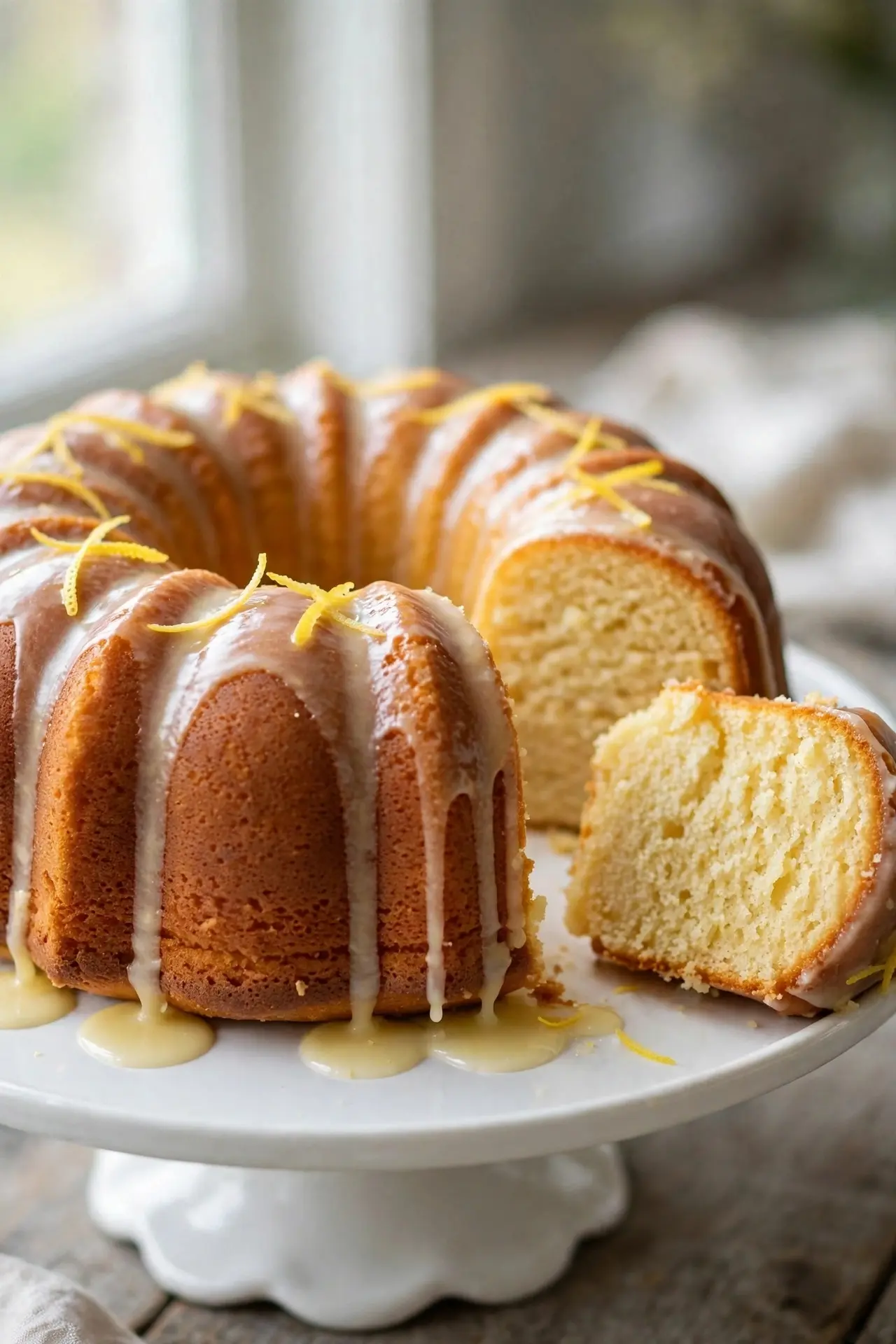
Moist Lemon Bundt Cake with Lemon Glaze
Ingredients
Method
- Heat oven to 350°F. Grease and flour a 10 to 12 cup Bundt pan, working butter into every ridge.
- Whisk flour, baking powder, baking soda, and salt together. Set aside.
- Beat butter, sugar, and lemon zest 3 to 4 minutes, until pale and noticeably fluffier.
- Add eggs one at a time, then mix in vanilla, until batter is smooth and slightly glossy.
- Add flour mixture in three additions, alternating with buttermilk in two, mixing just until streaks disappear.
- Fold in lemon juice by hand until smooth.
- Pour into prepared pan. Bake 55 to 65 minutes, until a toothpick comes out clean and the top springs back.
- Cool in the pan 15 minutes, then invert onto a rack and cool completely, about 90 minutes, before glazing.
- Whisk powdered sugar and lemon juice until smooth and pourable, then pour over the cooled cake.