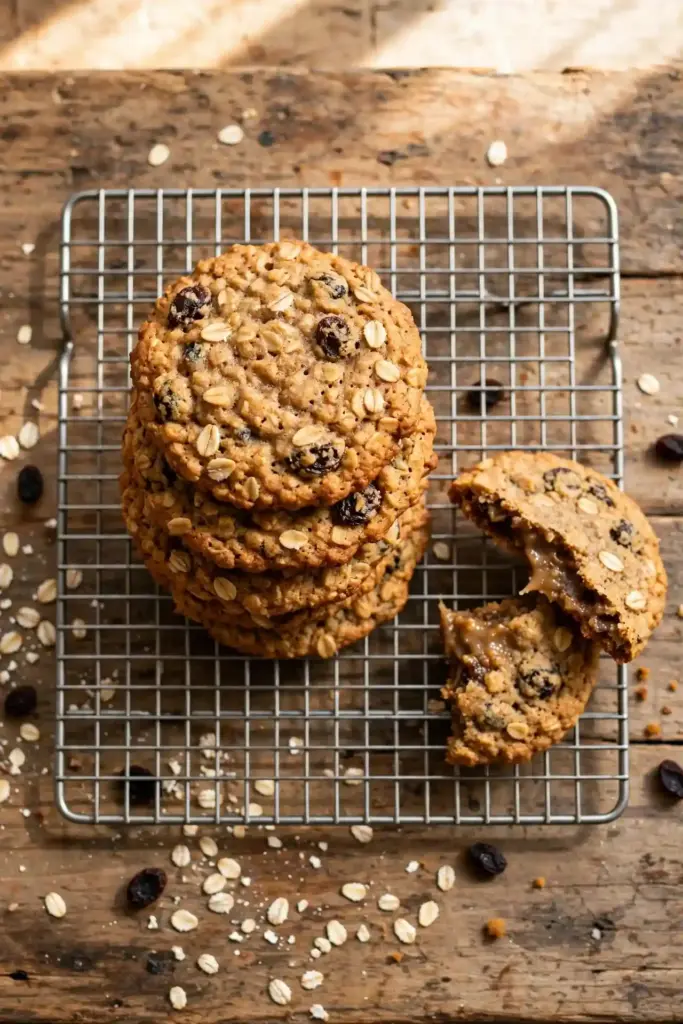
Most oatmeal cookies fail in one of two directions. They spread into thin, greasy discs, or they puff up into something closer to a small cake. Both problems trace back to the same two things: the temperature of the butter and how long the dough sits in the fridge before it hits the oven. Fix those, and you get what an oatmeal cookie is supposed to be: crisp at the edge, chewy in the middle, and thick enough to hold its shape.
Table of Contents
This recipe uses old-fashioned rolled oats, a mix of brown and white sugar, and a short chill that firms the butter back up before baking. Nothing exotic. It’s the kind of dough you can mix in one bowl on a weeknight.
What makes oatmeal cookies chewy instead of cake-like? Chewiness comes from pulling the cookies out of the oven while the centers still look slightly underbaked and puffed. They finish setting on the hot pan. Leaving them in until the centers look fully cooked dries them out and pushes the texture toward cakey.
Why You’ll Love It
- The dough comes together in one bowl with no special equipment.
- A 30-minute chill is enough to fix spreading, so there’s no need to wait overnight.
- Old-fashioned oats give real texture and chew instead of the softer, blander bite you get from quick oats.
- The base recipe swaps easily between raisins, chocolate chips, or dried cranberries without changing the method.
Ingredients
- 1 cup (227g) unsalted butter, softened but still cool to the touch
- 1 cup (200g) packed light brown sugar — this is the main source of the chewy texture, since brown sugar holds more moisture than white
- 1/2 cup (100g) granulated sugar — balances the brown sugar and helps the edges crisp
- 2 large eggs, room temperature
- 1 teaspoon vanilla extract
- 1 1/2 cups (188g) all-purpose flour, spooned and leveled
- 1 teaspoon baking soda
- 1 teaspoon ground cinnamon
- 1/2 teaspoon salt
- 3 cups (270g) old-fashioned rolled oats (not quick oats or instant)
- 1 cup (150g) raisins, or substitute chocolate chips or dried cranberries
Recipe Timing
- Prep time: 15 minutes
- Chill time: 30 minutes
- Cook time: 12 minutes
- Total time: 57 minutes
- Servings: 24 cookies
- Difficulty: Easy
- Cuisine: American
- Course: Dessert
Substitutions
Butter. Coconut oil works in a pinch, but it firms up harder in the fridge than butter does, so the cookies come out with a snappier edge and a less rich flavor. If you use it, chill the dough closer to 45 minutes.
Flour. Swapping half the all-purpose flour for whole wheat flour is fine, but expect a denser cookie that spreads a little less. Don’t go beyond half or the texture turns tough.
Oats. Old-fashioned rolled oats are not optional here if chew is the goal. Quick oats have been cut into smaller pieces and absorb liquid faster, which softens the dough and produces a mushier, more cake-like cookie. If it’s all you have, the cookies will still be edible, just noticeably softer.
Eggs. A flax egg (1 tablespoon ground flaxseed plus 3 tablespoons water, rested 5 minutes) works for an egg-free version. The cookies will be slightly denser and won’t spread quite as much.
Sugar ratio. More brown sugar relative to white pushes the cookie toward chewy and moist. More white sugar pushes it toward thin and crisp. This recipe’s 2-to-1 ratio favors chew.
Mix-ins. Raisins can be swapped one for one with chocolate chips, dried cranberries, or chopped dates. Walnuts or pecans (1/2 cup, chopped) can be added alongside the raisins without changing the timing.
Allergen and Dietary Disclosure
This recipe contains wheat (flour), eggs, and dairy (butter). If walnuts or pecans are added per the Substitutions section, it also contains tree nuts.
- Wheat/gluten: a 1-to-1 gluten-free flour blend can replace the all-purpose flour, though the cookies will spread slightly less. Oats are naturally gluten-free but are frequently processed in facilities that also handle wheat, so use oats labeled gluten-free if that matters for your household.
- Eggs: see the flax egg substitution above.
- Dairy: plant-based butter alternatives work, but many contain more water than dairy butter, which can make the dough spread more. Chill the dough closer to 45 minutes if using one.
This information is provided as a general guide. Ingredient brands and formulations change, and cross-contamination is possible in any home or commercial kitchen. Readers with allergies should check current labels and use their own judgment rather than relying on this article alone.
Step-by-Step Instructions
- Whisk the dry ingredients. In a medium bowl, whisk together the flour, baking soda, cinnamon, and salt. Set aside. Doneness cue: no visible clumps of baking soda remain.
- Cream the butter and sugars. In a large bowl, beat the butter, brown sugar, and granulated sugar with a hand mixer or stand mixer on medium speed. Doneness cue: the mixture turns pale and fluffy, about 2 to 3 minutes. This step matters more than it looks: creaming too briefly leaves sugar crystals that melt out in the oven and cause spreading, so don’t rush it.
- Add the eggs and vanilla. Beat in the eggs one at a time, then the vanilla, scraping down the bowl as needed. Food safety note: raw eggs carry a small risk of salmonella. Avoid tasting the raw dough, and wash your hands and utensils after handling. Doneness cue: the batter looks smooth and slightly glossy, with no streaks of egg white.
- Mix in the dry ingredients. Add the flour mixture to the wet ingredients on low speed, mixing just until combined. Doneness cue: no dry flour streaks remain. Overmixing at this stage develops gluten and makes the cookies tough, so stop as soon as the flour disappears.
- Fold in the oats and raisins. Switch to a spatula and fold in the oats and raisins by hand. Doneness cue: oats and raisins are evenly distributed with no dry pockets.
- Chill the dough. Cover the bowl and refrigerate for at least 30 minutes, up to 24 hours. Doneness cue: the dough feels firm, not sticky, when pressed with a finger. This is the step that fixes flat cookies. Melted or overly soft butter spreads immediately in a hot oven; chilling lets it re-solidify so the cookie holds height instead of pooling out.
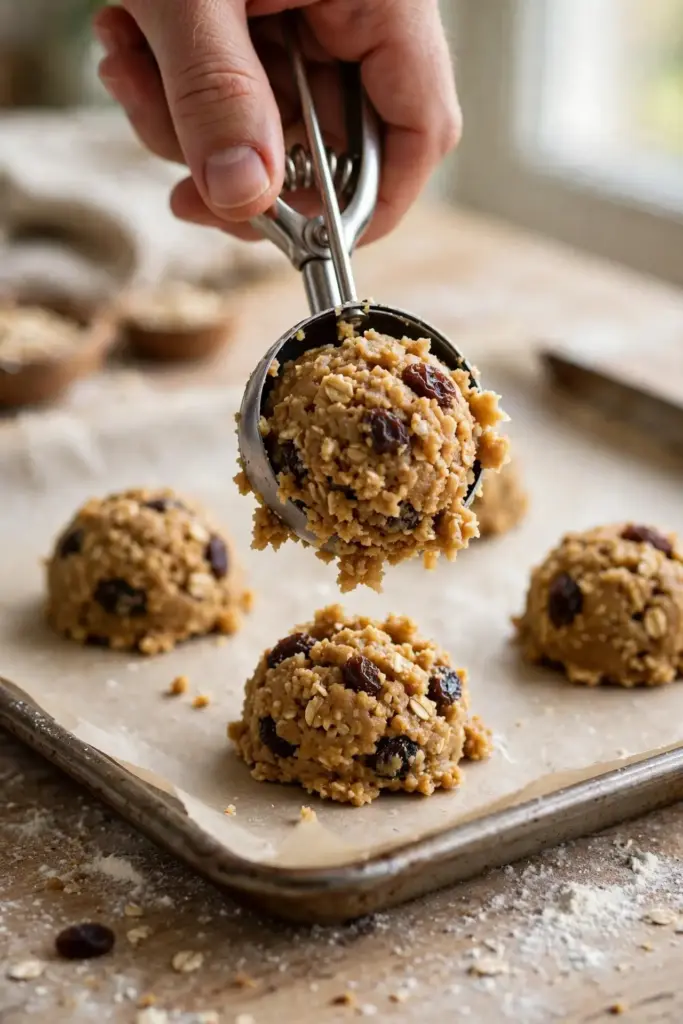
- Scoop and space the dough. Preheat the oven to 350°F (177°C) and line two baking sheets with parchment. Scoop the dough into balls of about 2 tablespoons (40g) each and place them 2 inches apart. Doneness cue: balls hold their shape without flattening on their own.
- Bake. Bake for 11 to 12 minutes, until the edges are golden brown and the centers still look pale, puffed, and slightly underbaked. Doneness cue: edges golden, centers not yet set. Pulling them at this point is what keeps the middle chewy, since they continue cooking on the hot pan after they come out.
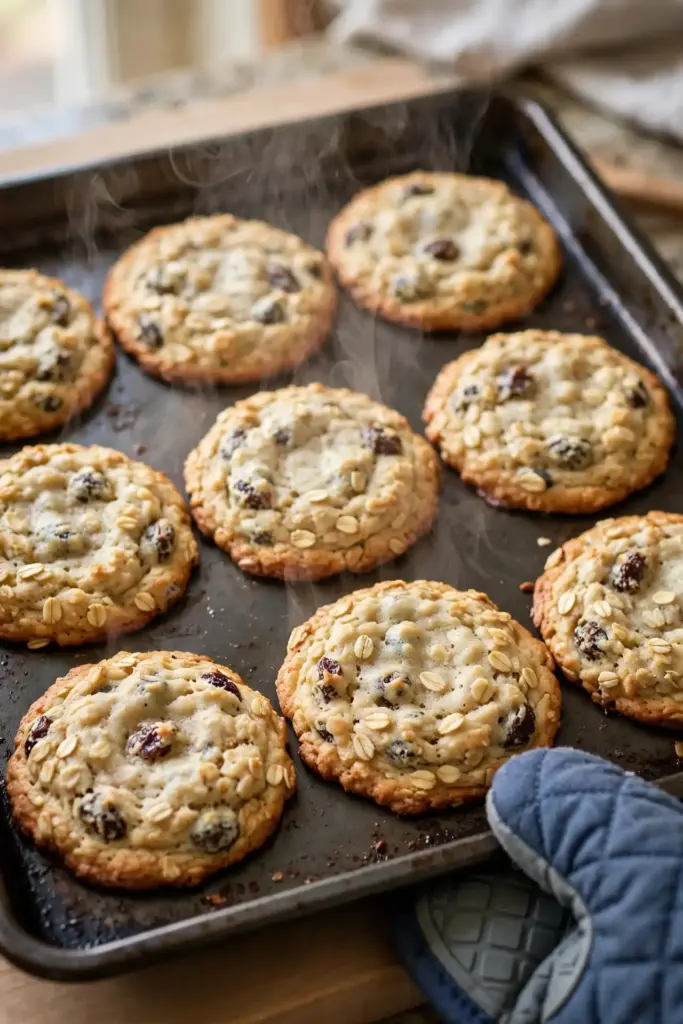
- Cool. Let the cookies rest on the baking sheet for 5 minutes, then transfer to a wire rack to cool completely. Doneness cue: cookies hold together and don’t crumble when lifted with a spatula.
Key Tips
- Weigh the flour if you have a kitchen scale. A packed cup of flour can run 20 to 30 grams heavier than a spooned-and-leveled one, and that extra flour is a common cause of dry, cakey cookies.
- Don’t skip the chill even if you’re in a hurry. Ten minutes in the freezer gets close to the same effect as 30 minutes in the fridge.
- Old-fashioned oats, not quick oats. This is the single biggest lever on texture in this recipe.
- Pull the cookies while the centers still look underdone. They firm up as they cool, and a cookie that looks fully baked in the oven will be overbaked by the time it’s cool.
Common Oatmeal Cookies Mistakes and How to Fix Them
- Cookies come out flat and greasy. Usually caused by butter that was too warm when creamed, or dough that wasn’t chilled. Let butter soften at room temperature rather than microwaving it, and don’t skip the 30-minute chill.
- Cookies are dry or cakey instead of chewy. Almost always overbaking, or too much flour from scooping instead of spooning it into the measuring cup. Pull the cookies while the centers still look slightly underdone.
- Cookies taste mushy rather than chewy. This points to quick oats or instant oats standing in for old-fashioned rolled oats. Quick oats are cut smaller and absorb liquid faster, which softens the whole cookie.
- Cookies spread unevenly on the tray. Dough balls that are different sizes bake unevenly. A cookie scoop keeps portions consistent so the whole batch finishes at the same time.
Variations
- Chocolate chip oatmeal cookies. Swap the raisins for an equal amount of semisweet chocolate chips.
- Cranberry white chocolate oatmeal cookies. Use dried cranberries in place of raisins and add 1/2 cup white chocolate chips.
- Spiced oatmeal cookies. Add 1/4 teaspoon ground nutmeg and a pinch of ground cloves alongside the cinnamon for a warmer, more autumnal flavor.
- Walnut oatmeal cookies. Add 1/2 cup chopped walnuts along with the raisins for extra crunch. Toast the walnuts for 5 minutes first if you want a deeper flavor.
Serving Suggestions
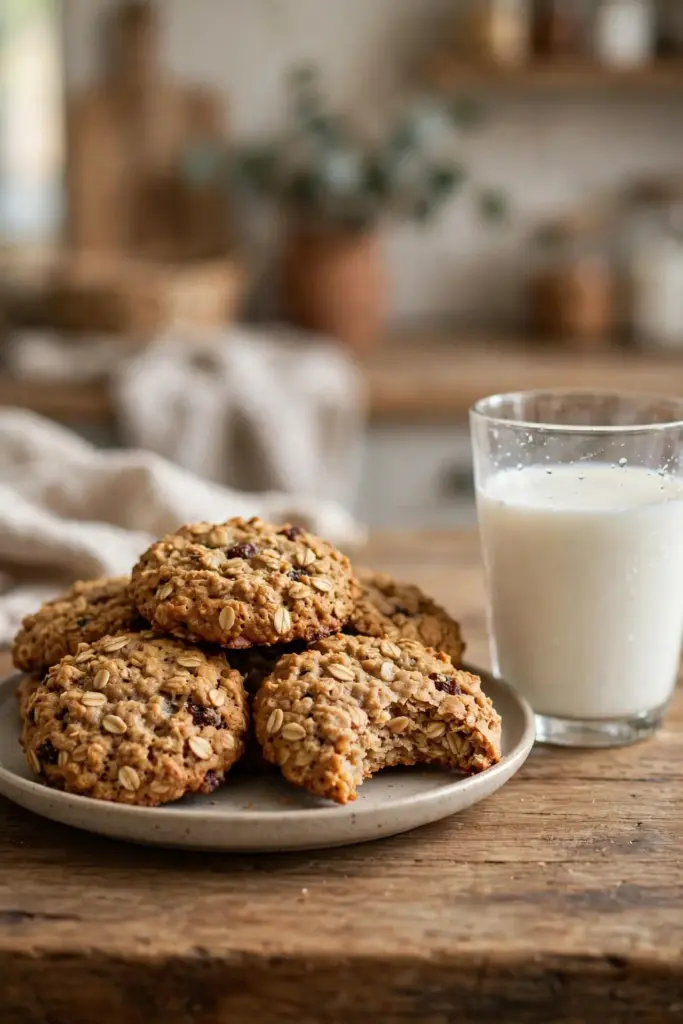
- With a cold glass of milk, the classic pairing for a reason.
- Alongside coffee or tea for an afternoon break.
- Crumbled over vanilla yogurt or ice cream for texture.
- Packed into lunches or a snack container for the week (see your Desserts category for more lunchbox-friendly bakes).
- Paired with a mug of hot cider in cooler months.
Storage, Reheating, and Freezing
Storage. Keep cooled cookies in an airtight container at room temperature for up to 5 days. Adding a slice of bread to the container helps them stay soft longer.
Reheating. Warm a cookie for 8 to 10 seconds in the microwave to bring back a fresh-baked texture, especially if it’s been a few days.
Freezing. Baked cookies freeze well for up to 3 months in an airtight container or freezer bag, with parchment between layers. Thaw at room temperature for about 20 minutes.
Make-ahead. The dough can be made up to 3 days ahead and kept covered in the fridge, which also deepens the flavor slightly. For longer storage, scoop the dough into balls, freeze them on a tray until solid, then transfer to a freezer bag for up to 3 months. Bake straight from frozen, adding 1 to 2 extra minutes.
Nutrition Information
Per cookie (based on 24 cookies per batch):
- Calories: 210
- Protein: 3g
- Carbohydrates: 29g
- Fat: 9g
- Fiber: 1g
- Sugar: 17g
- Sodium: 105mg
These are estimates calculated from typical ingredient values. Actual numbers vary with specific brands, cuts, and portion size. Readers tracking intake closely should calculate their own figures using their exact ingredients.
Frequently Asked Questions
Why did my oatmeal cookies turn out flat? The most common cause is butter that was too warm when it went into the dough, combined with skipping the chill step. Let butter soften at room temperature rather than microwaving it, and refrigerate the dough for at least 30 minutes before baking.
Can I use quick oats instead of old-fashioned oats? You can, but the texture changes. Quick oats are cut into smaller pieces and absorb liquid faster, which produces a softer, more cake-like cookie instead of the chewy texture old-fashioned oats give.
Why are my oatmeal cookies cakey instead of chewy? This usually comes from overbaking or too much flour. Pull the cookies out while the centers still look slightly underdone, and measure flour by spooning it into the cup and leveling it rather than scooping directly.
Can I freeze oatmeal cookie dough? Yes. Scoop the dough into balls, freeze on a tray until solid, then store in a freezer bag for up to 3 months. Bake from frozen, adding 1 to 2 extra minutes.
How long do oatmeal cookies stay fresh? Up to 5 days in an airtight container at room temperature.
Can I make oatmeal cookies without raisins? Yes. Leave them out entirely, or swap in chocolate chips, dried cranberries, or chopped nuts in the same amount.
Conclusion
Oatmeal cookies don’t need a long ingredient list or a complicated method. What separates a good batch from a flat or cakey one is butter temperature and a short rest in the fridge before baking. Get those two things right, and old-fashioned oats do the rest of the work, giving the cookies real chew instead of a soft, forgettable crumb. Once you’ve made the base recipe once, swapping the mix-ins takes no extra effort.
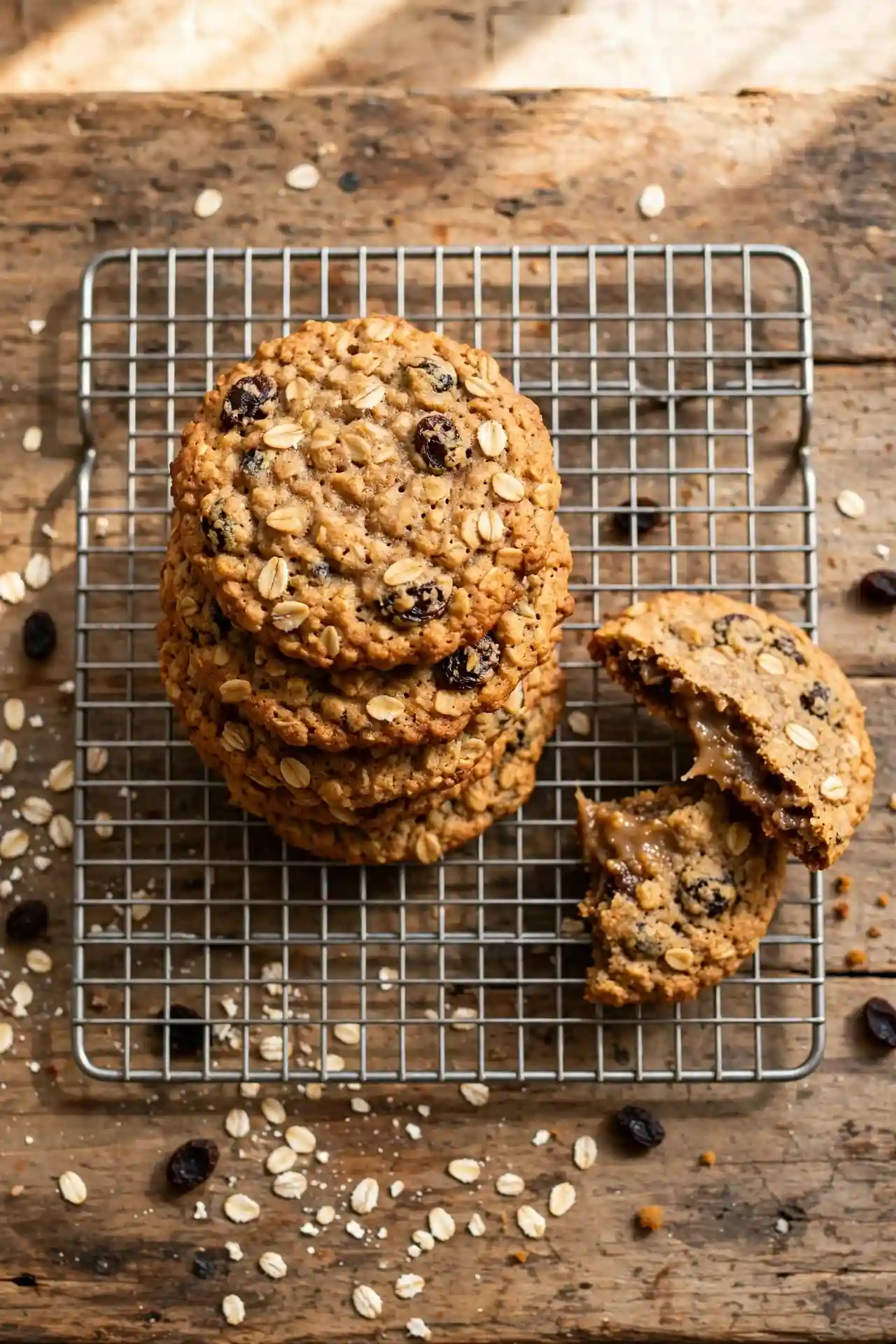
Chewy Oatmeal Cookies
Ingredients
Method
- Whisk flour, baking soda, cinnamon, and salt in a bowl. Set aside.
- Beat butter, brown sugar, and granulated sugar until pale and fluffy, about 2 to 3 minutes.
- Beat in eggs one at a time, then vanilla, until smooth with no streaks of egg.
- Mix in the flour mixture on low speed until no dry streaks remain.
- Fold in oats and raisins until evenly distributed.
- Cover and refrigerate at least 30 minutes, until dough feels firm.
- Preheat oven to 350°F (177°C). Scoop dough into 2-tablespoon (40g) balls, 2 inches apart on parchment-lined sheets.
- Bake 11 to 12 minutes, until edges are golden and centers still look slightly underbaked.
- Rest on the sheet 5 minutes, then move to a wire rack to cool completely.
Notes