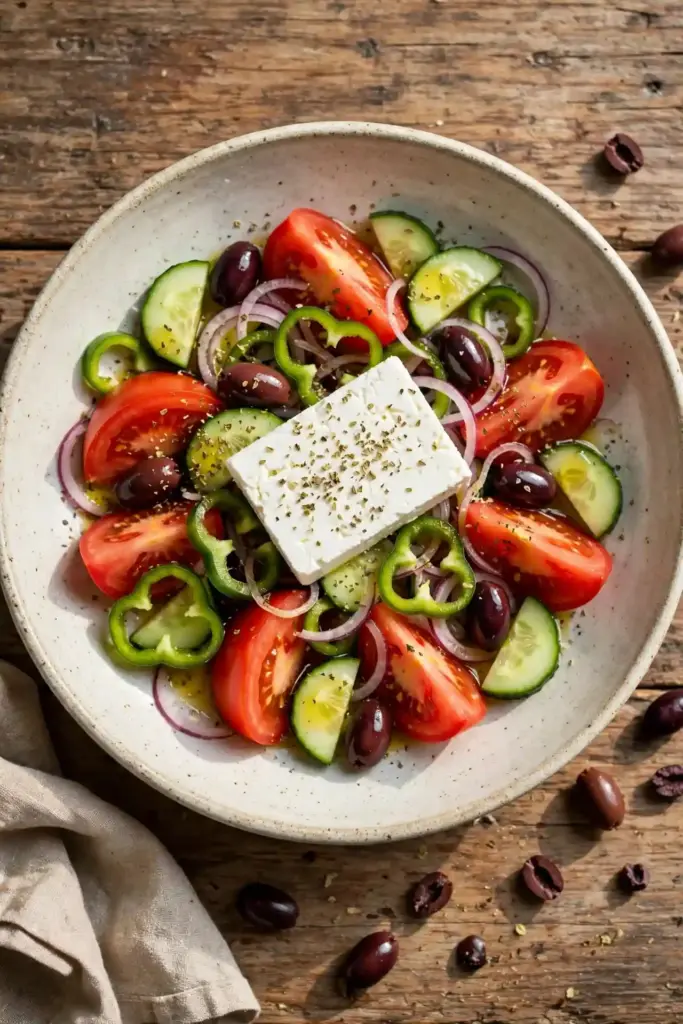
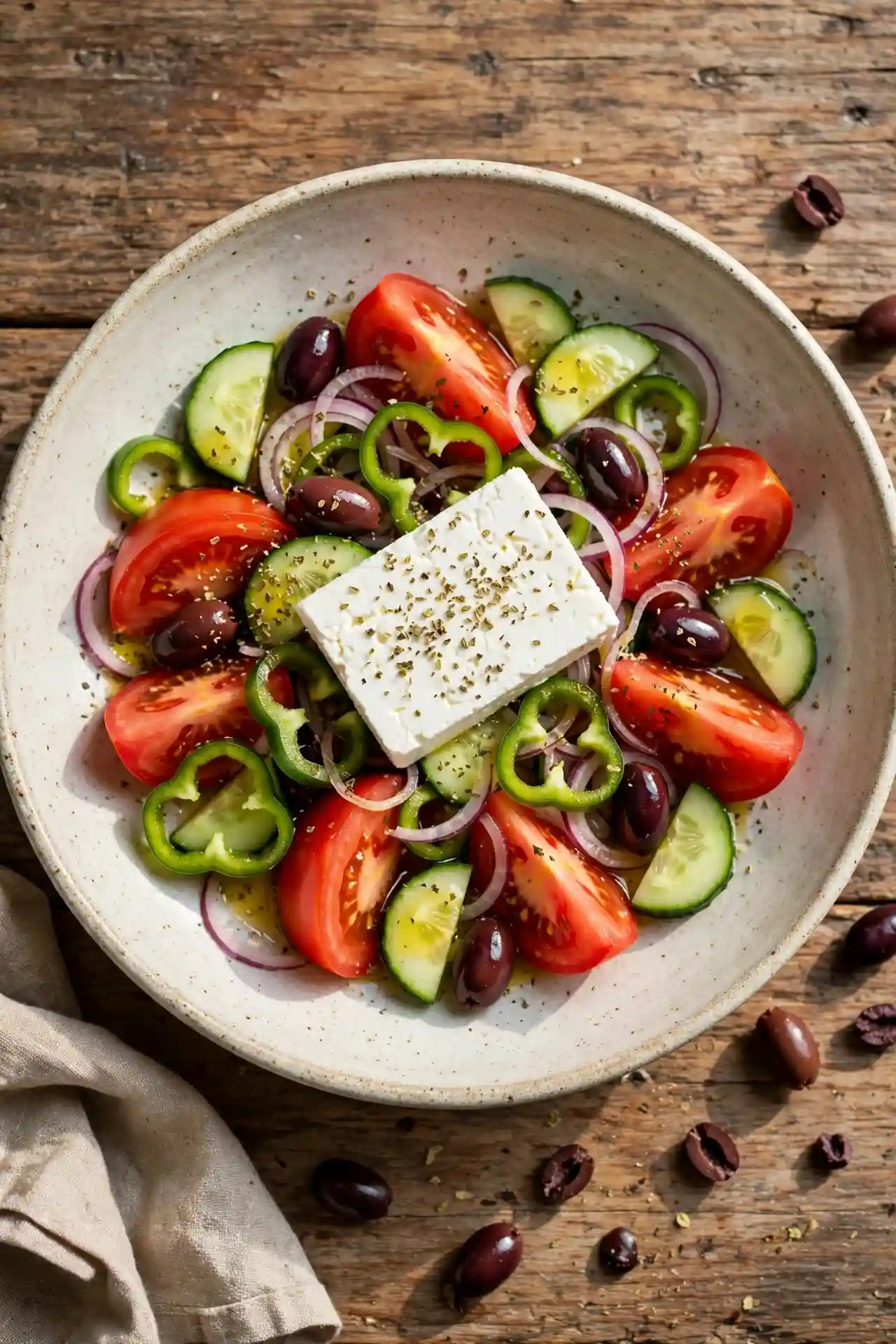
If you’ve only had “Greek salad” from a diner menu, this recipe is going to look wrong to you at first. There’s no lettuce in it. There’s no shredded feta scattered like confetti. Instead you get big, juicy wedges of tomato, thick cucumber rounds, a handful of Kalamata olives, and a whole slab of feta sitting on top like it owns the bowl. This is horiatiki, which translates roughly to “village salad,” and it’s what Greeks actually eat, not the bulked-up version that shows up at American Greek restaurants with iceberg lettuce and a bottled vinaigrette.
Table of Contents
The vegetables carry the dish here, so ripe, in-season tomatoes matter more than any other ingredient. If your tomatoes are pale and mealy, this salad will taste pale and mealy too.
What Makes This Different From a “Greek Salad” With Lettuce
Traditional Greek horiatiki has no lettuce and traditionally no vinegar either, just ripe tomatoes, cucumber, onion, green pepper, Kalamata olives, and a block of feta dressed with olive oil, salt, and oregano. The lettuce-and-vinaigrette version common outside Greece is a regional adaptation, not a mistake, but it’s a different salad.
Why You’ll Love It
- Comes together in about 15 minutes of actual cutting, no cooking involved.
- The whole block of feta stays creamy in the center instead of turning grainy the way pre-crumbled feta does once it sits in dressing.
- Big, chunky cuts mean you taste each vegetable on its own instead of a blended mush of everything at once.
- Works as a side for almost anything grilled, and it holds up fine as a light lunch on its own with some bread.
Ingredients
The Vegetables
- 4 large ripe tomatoes, cut into thick wedges (about 700g / 1.5 lbs)
- 1 English cucumber, sliced into half-moons about 1/2 inch thick
- 1 green bell pepper, sliced into rings
- 1/2 medium red onion, thinly sliced
- 1 cup Kalamata olives, pitted or whole
The Rest
- 200g (7 oz) block of feta cheese, kept whole
- 1/4 cup extra virgin olive oil
- 1 tablespoon red wine vinegar (optional, see note below)
- 1 teaspoon dried oregano, divided
- 1/2 teaspoon salt, plus more to taste
- Freshly ground black pepper
Ingredient notes:
- English cucumber has fewer seeds and less water than a standard slicing cucumber, so it won’t flood the bowl. If that’s what you have on hand, halve it lengthwise and scoop out the seeds first.
- Red wine vinegar isn’t part of the strictest traditional version, which relies on olive oil and the tomatoes’ own acidity. Adding a splash gives the dressing more brightness if your tomatoes are on the sweeter side. Leave it out if you want the older, simpler version.
- The feta stays in one piece. Crumbling it in advance lets it dissolve into the dressing and turn the whole bowl cloudy. A block holds its shape and stays creamy where you cut into it at the table.
- Dried oregano, not fresh, is standard here. Fresh oregano is sharper and more medicinal-tasting in this context; dried is milder and more aromatic once it hits warm olive oil.
Recipe Timing
- Prep time: 15 minutes
- Rest time: 10 minutes (letting the dressed vegetables sit so the flavors come together)
- Total time: 25 minutes
- Servings: 4
- Difficulty: Easy
- Cuisine: Greek
- Course: Salad, Side Dish
Substitutions
- No Kalamata olives? Any brine-cured black or green olive works, though the flavor will be milder. Skip canned black olives; they’re a different, softer thing entirely and taste flat next to the other ingredients here.
- No red wine vinegar? Lemon juice is a fair swap and closer to what some regions of Greece actually use instead of vinegar. Use about the same amount.
- No English cucumber? A regular cucumber works if you peel it partway (alternating strips) and remove the seeds, which cuts down on excess water in the bowl.
- Feta substitute: A dairy-free feta-style block will hold its shape similarly, but the flavor is noticeably milder and less tangy. It’s a reasonable option for a dairy-free version, not a like-for-like swap.
Allergen and Dietary Disclosure
This recipe contains milk (feta cheese). There are no other common allergens in the standard ingredient list.
For a dairy-free version, swap in a plant-based feta alternative, understanding the flavor and texture will shift. This recipe is naturally gluten-free and vegetarian as written. Cross-contamination and specific brand formulations vary, so anyone managing an allergy should check ingredient labels and use their own judgment rather than relying on this description alone.
Step-by-Step Instructions
- Cut the tomatoes into thick wedges and place them in a large, wide bowl. Sprinkle with 1/4 teaspoon of the salt and let them sit while you prep everything else. Why this works: salting the tomatoes early draws out some of their juice, which becomes part of the dressing instead of watering it down later. You’ll notice liquid starting to pool at the bottom of the bowl after a few minutes.
- Slice the cucumber into half-moons about 1/2 inch thick and add to the bowl.
- Slice the green bell pepper into thin rings, removing the seeds and white pith, and add to the bowl.
- Thinly slice the red onion and add it in. If raw onion is too sharp for your taste, soak the slices in cold water for 5 minutes first, then drain, they’ll turn glossy and lose most of their bite.
- Add the olives to the bowl.
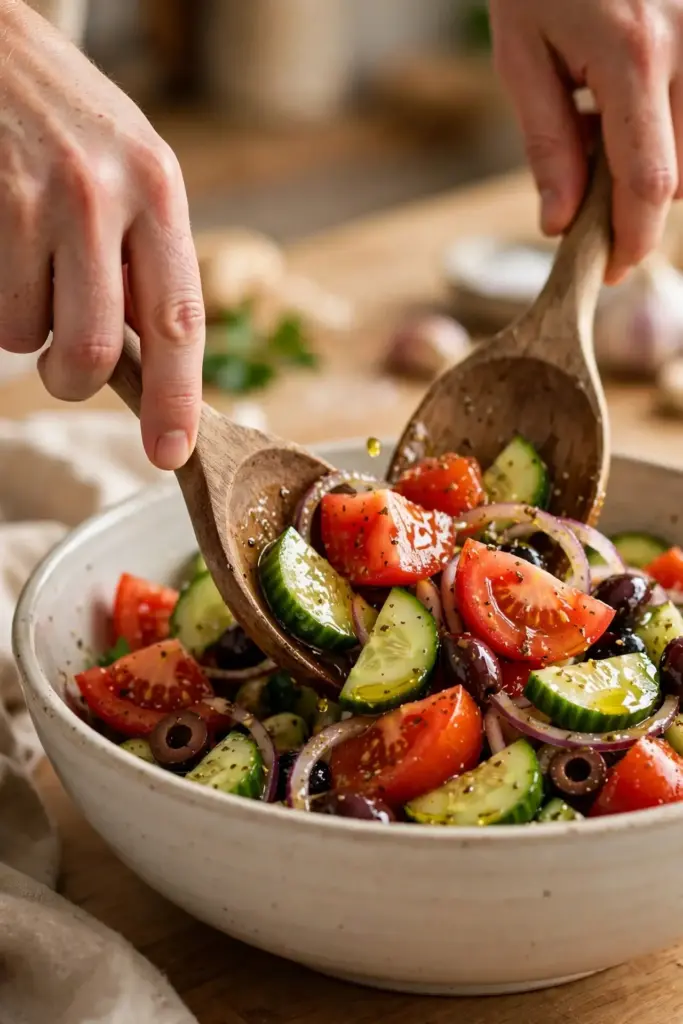
- In a small bowl or jar, whisk together the olive oil, vinegar (if using), remaining 3/4 teaspoon oregano, and a few grinds of black pepper. Pour over the vegetables and toss gently with your hands or two large spoons until everything is coated and glistening, with no dry patches left in the bowl.
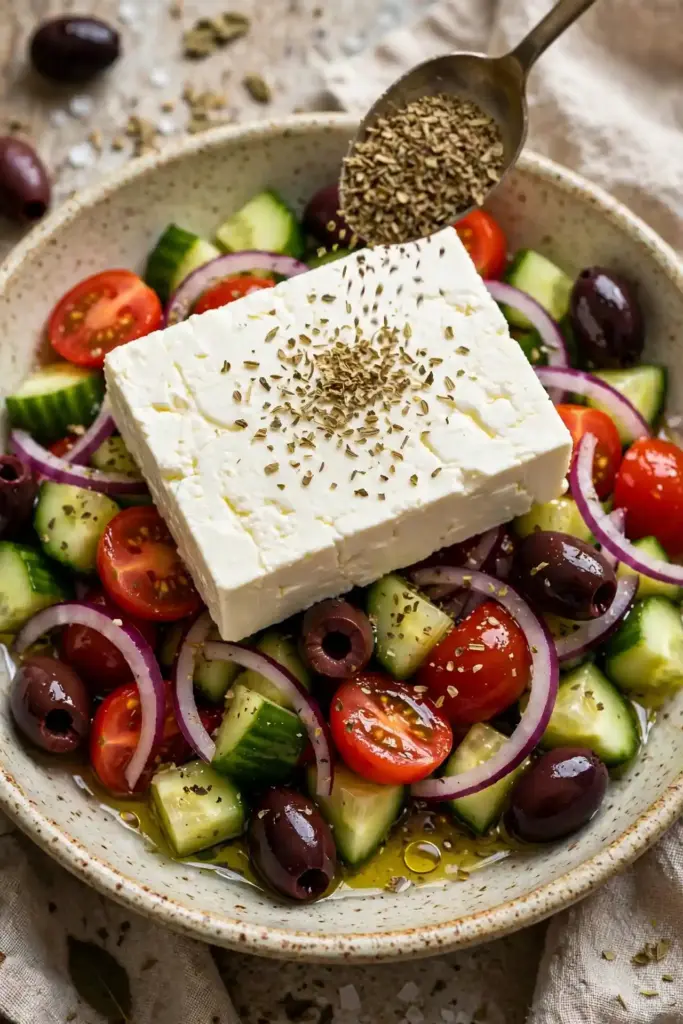
- Place the whole block of feta on top of the salad rather than mixing it in. Sprinkle it with a pinch more oregano and a light drizzle of olive oil.
- Let the salad sit for 10 minutes before serving. Why this works: those extra minutes let the salt finish pulling juice from the tomatoes and the dressing settle into the vegetables, so the salad tastes seasoned throughout instead of just on the surface. Serve it with the feta still whole, letting each person break off a piece at the table.
Key Tips
- Cut the vegetables in large, distinct pieces rather than small dice. Part of what makes this salad work is being able to taste the tomato, the cucumber, and the onion as separate things in the same bite, not blended together.
- Season the tomatoes with salt before anything else touches them. This single step does more for the final flavor than any amount of extra dressing.
- Use good olive oil. With only a handful of ingredients and no cooking, the oil’s flavor is not hidden by anything, so a mild, flavorless oil will make the whole salad taste flat.
- Don’t dress the salad more than 20 to 30 minutes before serving. Past that point the tomatoes and cucumber start releasing enough water to dilute the dressing and soften everything past the point of being crisp.
Common Mistakes and Troubleshooting
The salad turns watery in the bowl. This usually comes from skipping the salt-and-rest step on the tomatoes, or from using a regular seeded cucumber instead of an English one. Salt the tomatoes first and let them sit before adding the rest of the vegetables, and drain any excess liquid from a regular cucumber before adding it.
The feta dissolves into the dressing instead of staying creamy. This happens when the feta is crumbled and tossed in with everything else. Keep it in one block on top instead. It stays firmer and each bite has an actual piece of cheese rather than a general cheesy film over everything.
The onion overpowers the whole salad. Raw red onion can be genuinely harsh, especially if it’s been sitting around for a while. A 5-minute cold water soak mellows it significantly without cooking it or changing the flavor much.
The dressing tastes flat or one-note. This is almost always an oil quality problem, not a recipe problem. A neutral or lower-grade olive oil won’t add much flavor on its own, which matters a lot in a dish with this few ingredients.
Variations
- Add capers. A tablespoon of drained capers adds a briny hit that plays well against the sweetness of ripe tomatoes.
- Swap in lemon juice. Instead of vinegar, use fresh lemon juice for a brighter, slightly different acidity that’s common in some home versions of this salad.
- Add a few pepperoncini. Sliced pepperoncini peppers bring a mild heat and vinegar tang that a lot of home cooks add even though it’s not part of the strictest traditional version.
- Stir in fresh dill. A tablespoon of chopped fresh dill instead of or alongside the oregano gives the salad a slightly different, grassier direction.
Serving Suggestions
- Serve alongside grilled chicken or lamb skewers as part of a Mediterranean-style dinner.
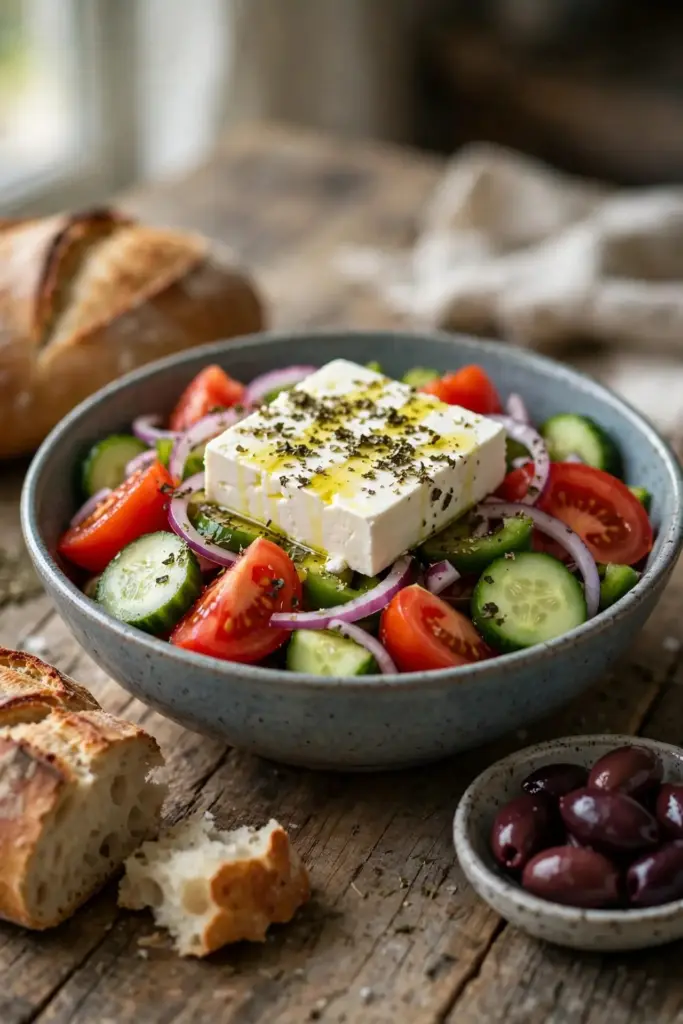
- Pair with warm pita or crusty bread for scooping up the leftover dressing at the bottom of the bowl.
- Add a scoop of hummus or tzatziki on the side to round out a light lunch.
- Serve it as one part of a larger mezze spread with dolmas, roasted red peppers, and marinated artichokes.
- Bring it to a potluck or barbecue as a no-cook side that holds up well outdoors.
Storage, Reheating, and Make-Ahead
Storage: Leftovers keep in an airtight container in the refrigerator for up to 1 day. Past that, the vegetables lose their crunch and the salad turns soft and watery.
Reheating: This salad is served cold or at room temperature and is not meant to be reheated.
Freezing: This salad does not freeze well. The vegetables and feta both lose their texture completely once thawed and turn mushy.
Make-ahead: You can chop the vegetables and store them separately, undressed, in the refrigerator up to a day in advance. Combine and dress them right before serving so nothing sits in the dressing longer than necessary.
Nutrition Information
Per serving (serves 4):
- Calories: approximately 340
- Protein: 9g
- Carbohydrates: 16g
- Fat: 28g
- Fiber: 4g
- Sugar: 7g
- Sodium: 830mg
These are estimates calculated from typical ingredient values. Actual numbers will vary depending on the specific brands, the size of your vegetables, and how much oil and feta you end up using. If you’re tracking intake closely, calculate the numbers yourself using your exact ingredients.
Frequently Asked Questions
Does real Greek salad have lettuce in it? No. Traditional Greek horiatiki is made without lettuce, it’s tomatoes, cucumber, onion, green pepper, olives, and feta. The lettuce-based version is a variation that developed outside Greece, mainly in American Greek restaurants.
Why is my Greek salad watery? Usually it’s either skipping the step where you salt the tomatoes and let them sit, or using a regular cucumber with a lot of seeds and water in it instead of an English cucumber. Both add excess liquid to the bowl.
Can I make Greek salad ahead of time? You can chop everything ahead and store the vegetables separately, undressed, in the fridge for up to a day. Dress it right before serving. Once dressed, it’s best eaten within a few hours before the vegetables start softening.
Should the feta be crumbled or left whole? Traditionally it’s left as a whole block on top of the salad rather than crumbled in. This keeps the cheese from breaking down into the dressing and turning the whole bowl cloudy, and it’s how the dish is actually served in Greece.
What kind of olives should I use? Kalamata olives are standard for this salad. Canned black olives are a different product with a much softer texture and less flavor, so they don’t really work as a substitute here.
Is Greek salad gluten-free? Yes, as written, this recipe has no wheat or gluten-containing ingredients. Always check the labels on packaged olives or feta if you’re cooking for someone with celiac disease, since processing methods vary by brand.
Conclusion
This salad doesn’t need much from you beyond good tomatoes and a decent bottle of olive oil. Leave the feta whole, salt the tomatoes before anything else, and don’t let the dressed salad sit around too long before it hits the table. That’s really the whole technique behind a good Greek salad, and it’s why the simplest version of this dish is usually the best one.
Greek Salad (Horiatiki)
Ingredients
Method
- Cut tomatoes into thick wedges, place in a large bowl, sprinkle with 1/4 teaspoon salt, and let sit while prepping the rest. Juice should start pooling at the bottom of the bowl.
- Slice cucumber into 1/2-inch half-moons and add to the bowl.
- Slice green bell pepper into rings, removing seeds, and add to the bowl.
- Thinly slice red onion and add in (optional: soak in cold water 5 minutes first to mellow the bite).
- Add olives to the bowl.
- Whisk olive oil, vinegar (if using), remaining oregano, and black pepper. Pour over vegetables and toss until glistening with no dry patches.
- Place the whole block of feta on top. Sprinkle with a pinch of oregano and a light drizzle of olive oil.
- Let sit 10 minutes before serving so the dressing settles into the vegetables. Serve with the feta whole for guests to break apart at the table.