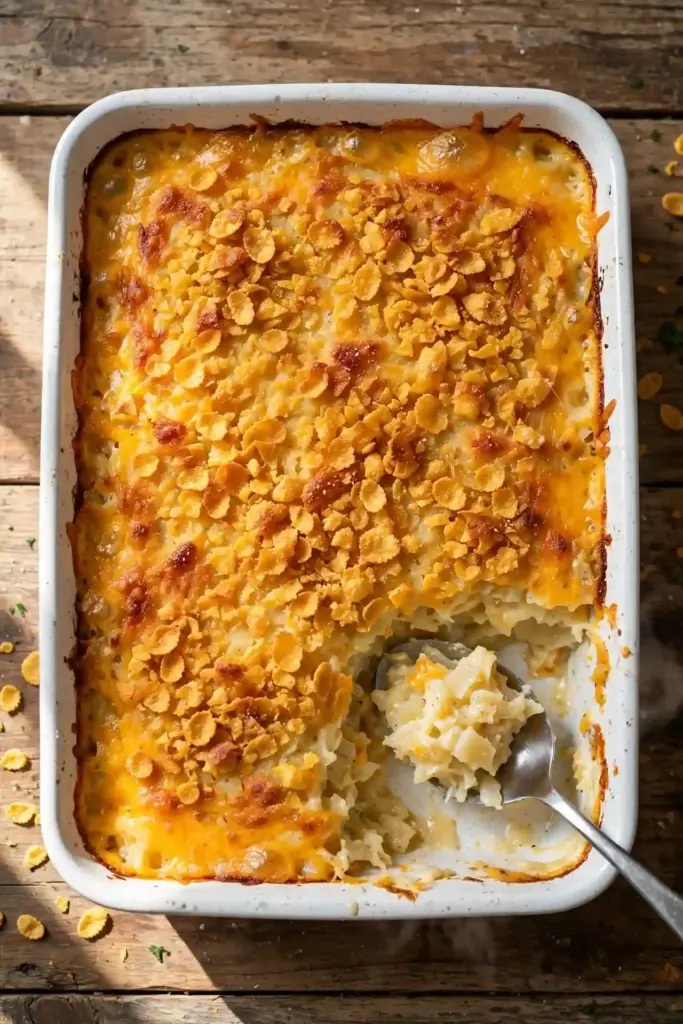
Hashbrown casserole shows up under a few different names depending on where you grew up. In the Mountain West, it’s usually called funeral potatoes, a nod to how often it turns up at post-funeral church luncheons and family gatherings. Everywhere else it’s just the cheesy potato dish that sits next to the ham at holiday dinners and disappears fastest at potlucks. The recipe itself hasn’t changed much in decades: frozen hash browns, a can of soup, sour cream, cheddar, and a crushed cornflake topping baked until the top goes deep gold and the inside turns soft and cheesy.
Table of Contents
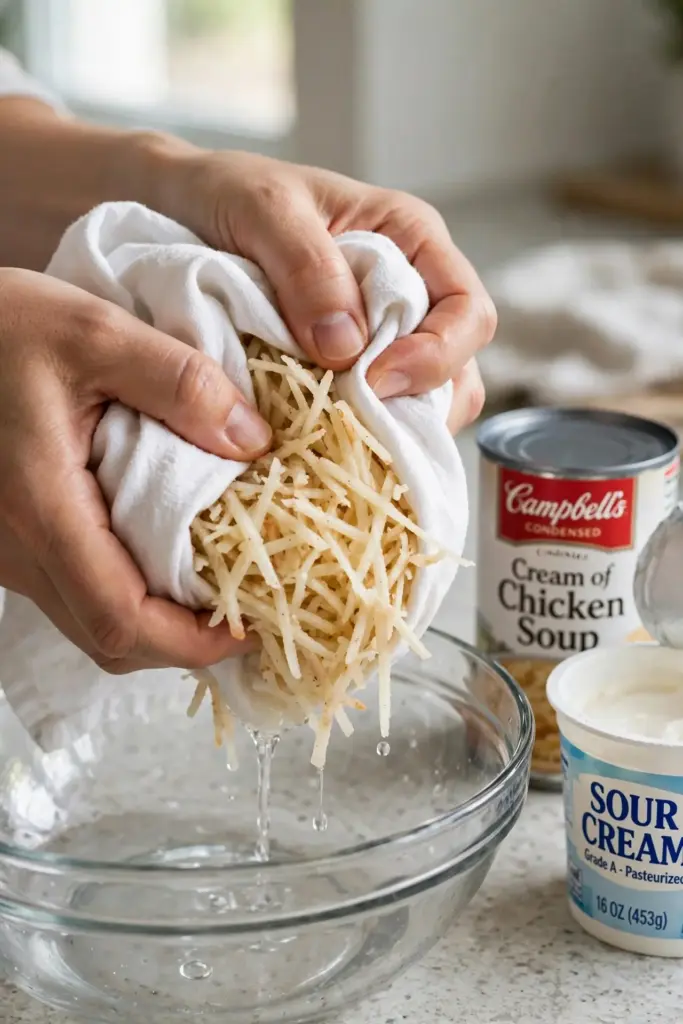
Do you need to thaw hash browns before making hashbrown casserole? Yes. Frozen hash browns carry ice crystals that melt into water in the oven, and that extra liquid is the main reason the casserole comes out soggy instead of set. Thawing and pressing them dry first solves the problem before it starts.
Why You’ll Love This Hashbrown Casserole
- Built from freezer and pantry staples, so there’s no separate protein to cook or extra trip to the store.
- The cornflake topping stays audibly crunchy over a soft, creamy potato layer underneath.
- Assembles up to a day ahead, which matters when the oven is already full of a turkey or a ham.
- One 9×13 dish feeds 10 to 12 people, so it scales to a holiday table without doubling anything.
Ingredients
- Frozen shredded hash browns (30 oz bag): the base of the whole dish. Shredded works better here than diced or cubed hash browns, since it packs into an even layer instead of leaving gaps.
- Condensed cream of chicken soup (10.5 oz can): the main binder. It ties the sauce together without needing a separate roux (see Substitutions for other soup options).
- Sour cream (2 cups): adds the tang the soup alone doesn’t have. Leave it out and the casserole tastes flat.
- Unsalted butter (1/2 cup, melted, divided): half goes into the potato mixture for richness, half coats the cornflakes so the topping actually crisps instead of just drying out.
- Sharp cheddar cheese (2 cups, shredded, divided): sharp cheddar carries more flavor than mild, which matters since both the potatoes and the canned soup are pretty neutral on their own.
- Garlic powder (1 teaspoon), salt (1 teaspoon), black pepper (1/2 teaspoon): for seasoning. Canned soup alone won’t season the potatoes.
- Cornflakes (2 cups, crushed): the topping. Cornflakes hold their crunch through baking better than fresh breadcrumbs, which tend to just brown and go soft.
Recipe Timing
- Prep time: 15 minutes
- Cook time: 50 minutes
- Rest time: 5 minutes
- Total time: 70 minutes
- Servings: 10 to 12
- Difficulty: Easy
- Cuisine: American
- Course: Side Dish
Substitutions
- Cream of chicken soup → cream of celery: milder and less overtly chicken-flavored, a good swap if you want a more neutral base. Cream of mushroom also works, but it adds an earthy note that changes the dish more than the other two.
- Sour cream → plain full-fat Greek yogurt: similar tang, a bit less fat, and it holds up fine in the oven. Skip the fat-free version, it tends to break and turn grainy once baked.
- Sharp cheddar → Colby-Jack: melts smoother and tastes milder, worth it if you’re feeding kids who find sharp cheddar too strong. You do lose some flavor depth in the trade.
- Cornflakes → crushed buttery round crackers: a softer, more buttery crunch than cornflakes give, and it browns a little faster, so check it a few minutes early.
Allergen and Dietary Disclosure
This casserole contains milk (sour cream, cheddar, butter, and the canned soup all carry dairy) and typically wheat/gluten (most boxed cornflakes use malt flavoring derived from barley, even though corn itself is gluten-free). If gluten is a concern, look for a certified gluten-free cornflake or use crushed rice cereal instead, and check the soup label too, since some brands thicken with wheat flour.
There isn’t a dairy-free swap that keeps the same texture without changing the dish meaningfully. A dairy-free cream soup, a coconut-based sour cream alternative, and a plant-based cheese will work in a pinch, but expect a looser sauce and less melt.
Ingredient labels and cross-contamination risks vary by brand, so anyone cooking for a person with a food allergy should check packaging directly rather than relying on this list alone.
Step-by-Step Instructions
- Preheat the oven to 350°F. Grease a 9×13-inch baking dish with butter or nonstick spray.
- Thaw the hash browns completely, either overnight in the fridge or a few hours at room temperature. Spread them on a clean kitchen towel and press firmly to squeeze out the water. Doneness cue: the potatoes feel dry to the touch and the towel comes away visibly damp. Why this works: any moisture left in the shreds turns to steam in the oven and pools at the bottom of the dish, which is the single biggest cause of a watery casserole.
- In a large bowl, stir together the cream of chicken soup, sour cream, 1/4 cup of the melted butter, garlic powder, salt, and pepper until smooth.
- Add the dried hash browns and 1 1/2 cups of the cheddar to the soup mixture. Fold gently with a rubber spatula until just combined. Doneness cue: the potato shreds are evenly coated but still separate, not mashed into a paste.
- Spread the mixture evenly into the prepared dish, pressing lightly to level it out.
- Scatter the remaining 1/2 cup cheddar over the top.
- In a small bowl, toss the crushed cornflakes with the remaining 1/4 cup melted butter until evenly coated, then scatter over the cheese layer.
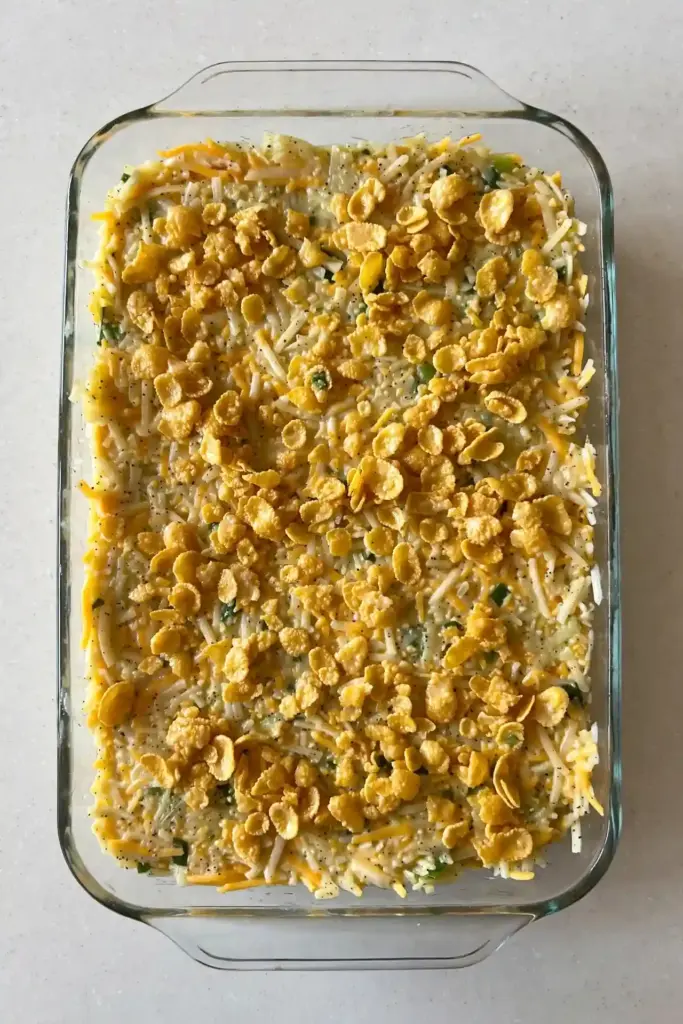
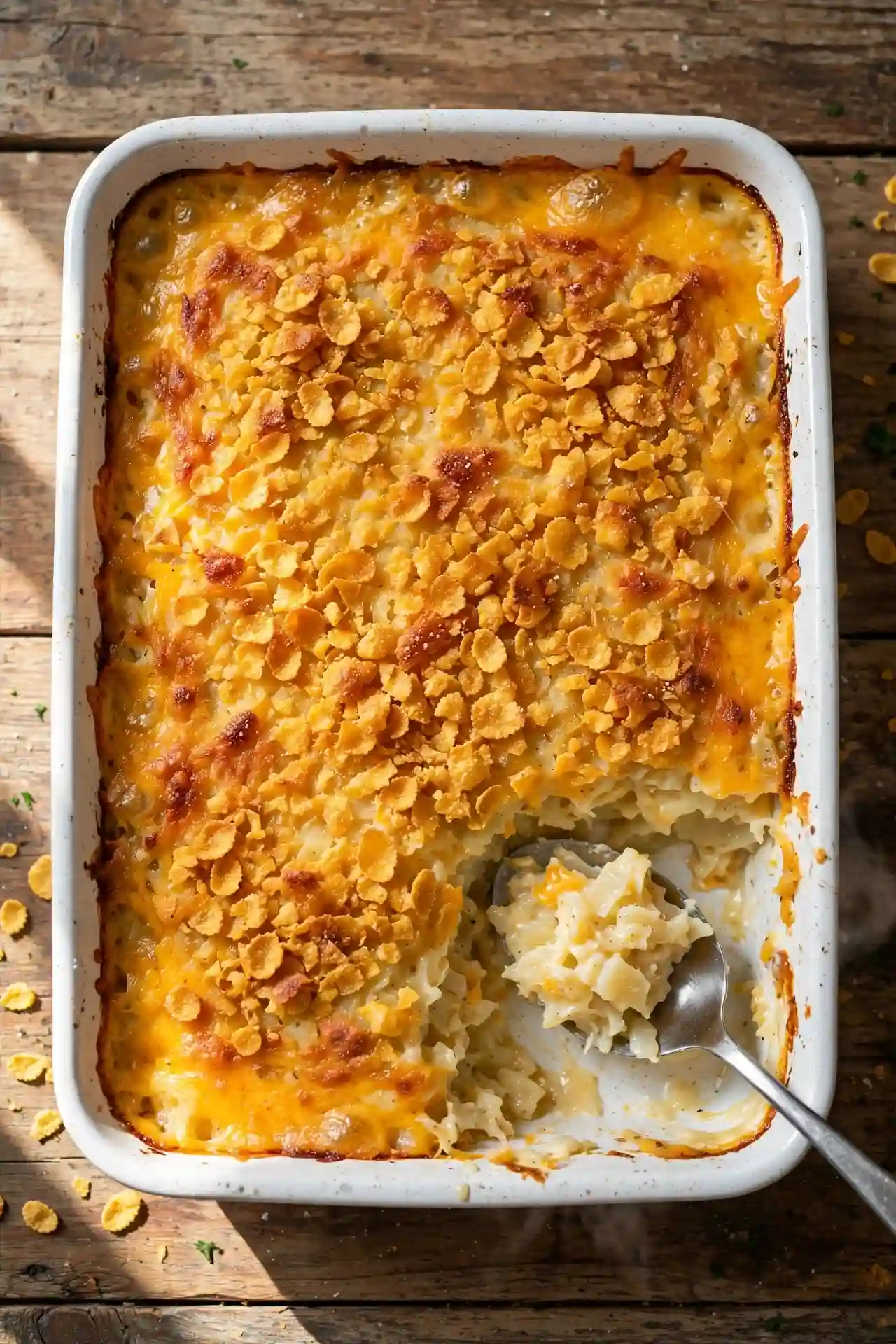
- Bake uncovered for 50 minutes. Doneness cue: the topping is deep golden brown, the edges are visibly bubbling, and a knife inserted in the center meets no resistance.
- Let the casserole rest 5 minutes before serving. Why this works: the potato layer is still loose right out of the oven; a short rest lets it firm up enough to hold a scoop shape instead of sliding apart on the spoon.
Key Tips
- Squeeze the hash browns twice, not once. Most people underestimate how much water is still trapped after a single pass with the towel.
- Shred your own block of cheddar instead of using bagged pre-shredded cheese. The anti-caking starch coating on bagged cheese keeps it from melting smoothly into the sauce.
- If the topping browns before the center is fully set, tent the dish loosely with foil for the last 10 minutes rather than pulling it out early.
- Season the potato layer directly, not just the soup mixture. Canned soup already carries sodium, so relying on it alone tends to leave the potatoes underseasoned.
Common Mistakes and Troubleshooting
- Soggy casserole. Cause: skipping the thaw-and-squeeze step, so ice crystals melt into standing water during baking. Fix: thaw fully and press the hash browns dry before mixing them with anything else.
- Undercooked center. Cause: pulling the dish out once the top looks set, before the potato layer underneath has actually finished cooking. Fix: bake the full time and check with a knife in the center rather than judging by the top alone.
- Grainy sauce. Cause: using pre-shredded cheese for the whole recipe. Fix: shred your own cheddar, at least for the portion mixed into the base.
- Soft, soggy topping. Cause: mixing the cornflakes into the batter instead of scattering them on top. Fix: keep the topping separate and add it just before baking, not earlier.
Variations
- Turkey bacon and green onion: crumble cooked turkey bacon into the potato layer and scatter sliced green onion over the top after baking. Cook the turkey bacon a bit longer than the package suggests, since it renders less fat than pork bacon and can turn out limp otherwise.
- Green chile version: fold in a 4-ounce can of diced green chiles for a mild, tangy heat that cuts through the richness.
- Loaded potato version: sauté 1/2 cup diced onion and 1/2 cup diced bell pepper until soft, then fold into the potato mixture along with the cheese for more texture and a savory base note the soup alone doesn’t give.
Serving Suggestions
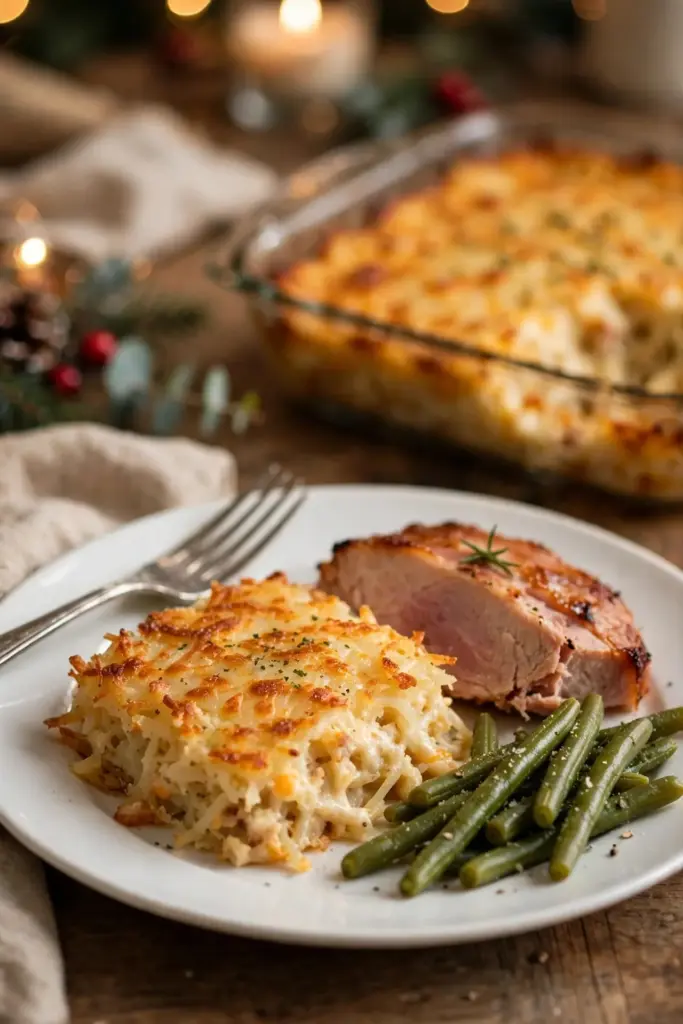
- Baked turkey ham or roast chicken (link to your Chicken category hub), since the casserole is rich enough to balance a plain protein.
- Green beans or another simple vegetable side, for a holiday plate.
- A green salad with a sharp vinaigrette to cut through the richness.
- Scrambled eggs and fruit, for a brunch spread (link to your Breakfast category hub).
Storing, Reheating, and Make-Ahead Tips for Hashbrown Casserole
- Storage: cool completely, then store in an airtight container in the refrigerator for 3 to 4 days.
- Reheating: cover with foil and reheat in a 350°F oven for 15 to 20 minutes, then uncover for the last 5 minutes to re-crisp the topping. The microwave heats it through faster but leaves the cornflakes soft.
- Freezing: the potato base freezes fine, but the cornflake topping does not, it turns soft once thawed. Freeze the assembled casserole without the topping for up to 2 months, thaw overnight in the fridge, then add the buttered cornflakes right before baking.
- Make-ahead: assemble the potato mixture and press it into the dish up to a day ahead, cover, and refrigerate. Add the topping just before it goes in the oven, and add a few extra minutes to the bake time if it’s going in cold from the fridge.
Nutrition Information
Per serving (based on 12 servings):
- Calories: 320
- Protein: 8g
- Carbohydrates: 24g
- Fat: 22g
- Fiber: 1g
- Sugar: 3g
- Sodium: 640mg
These numbers are estimates calculated from typical ingredient values. Actual numbers vary with specific brands, cuts, and portion size. Anyone tracking intake closely should calculate their own totals from the exact products used.
Frequently Asked Questions
Do you have to thaw hash browns for hashbrown casserole? Yes. Thaw them fully, either overnight in the fridge or a few hours at room temperature, and press out as much water as you can before mixing. Skipping this step is the most common reason the casserole comes out watery.
Why is my hashbrown casserole watery? Usually it’s moisture that was never removed from the hash browns before baking. It can also happen if the casserole is pulled out before the center has fully set, since an underbaked center reads as loose and wet even when the potatoes were dried properly.
Can I make hashbrown casserole ahead of time? Yes. Assemble the potato mixture in the baking dish, cover, and refrigerate up to a day ahead. Add the buttered cornflake topping right before it goes in the oven so it doesn’t go soft while it sits.
Can you freeze hashbrown casserole? The potato base freezes well for up to 2 months. The cornflake topping doesn’t hold up frozen, so it’s better to freeze the casserole without it and add fresh cornflakes and butter before baking.
What can I use instead of cream of chicken soup? Cream of celery makes a milder, more neutral base. Cream of mushroom works too, but it brings an earthier flavor that changes the dish more noticeably than the other two.
Is hashbrown casserole gluten-free? Not by default. Most boxed cornflakes contain malt flavoring made from barley, and some canned soups use wheat flour as a thickener. Check both labels, or swap in a certified gluten-free cornflake and a gluten-free condensed soup.
Conclusion
The one thing that actually determines whether a hashbrown casserole turns out or falls apart is moisture control. Everything else in the recipe is forgiving. Thaw the hash browns, press out as much water as you can, and the rest, which soup you use, how sharp the cheddar is, cornflakes versus crackers, comes down to preference. It’s built to sit out at a potluck, reheat cleanly the next day, and still be worth going back for a second scoop.
Hashbrown Casserole
Ingredients
Method
- Preheat oven to 350°F. Grease a 9×13-inch baking dish.
- Thaw hash browns fully and press dry in a clean kitchen towel until no more water comes out.
- Stir together soup, sour cream, 1/4 cup melted butter, garlic powder, salt, and pepper until smooth.
- Fold in hash browns and 1 1/2 cups cheddar until just combined; do not mash.
- Spread into the prepared dish in an even layer.
- Scatter remaining 1/2 cup cheddar on top.
- Toss crushed cornflakes with remaining 1/4 cup melted butter and scatter over the cheese.
- Bake uncovered 50 minutes, until the topping is deep golden brown and a knife inserted in the center meets no resistance.
- Rest 5 minutes before serving.