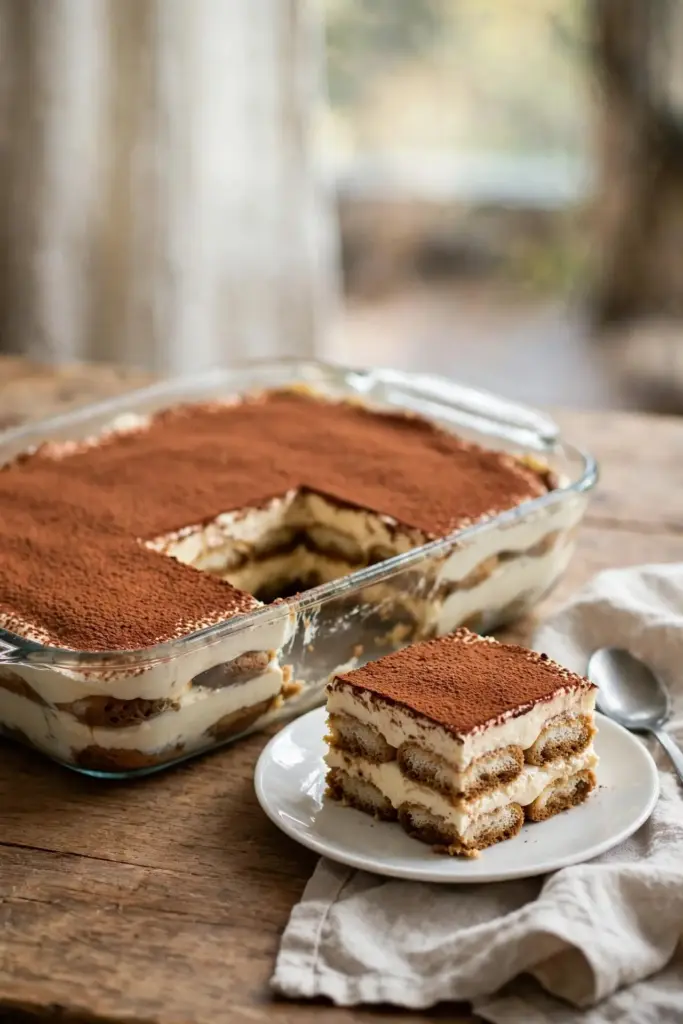
Tiramisu is layers of espresso-dipped ladyfingers and mascarpone cream, finished with a dusting of cocoa and nothing else on top. This version cooks the egg yolks over a double boiler before folding in the mascarpone, so the cream sets up thicker and the dessert is fully food-safe without you having to track down pasteurized eggs.
Table of Contents
Tiramisu is a chilled, no-bake Italian dessert made by layering coffee-dipped ladyfingers with a cooked egg yolk and mascarpone cream, then dusting the top with cocoa powder. It needs a night in the fridge before it’s ready to slice.
Why You’ll Love It
- The espresso-soaked ladyfingers stay tender instead of mushy, because you dip them for a second or two instead of soaking them.
- Cooking the egg yolks over a double boiler gives the cream a silkier, more stable texture than raw yolks would, and it’s food-safe without hunting down a specific egg brand.
- It’s a genuine make-ahead dessert. The flavor and texture are better the day after you build it, not worse.
- No oven. Everything happens on the stovetop, in a mixing bowl, and in the fridge.
Ingredients
For the coffee soak
- 1 1/2 cups (355 ml) strong brewed coffee or espresso, cooled to room temperature — the base flavor of the whole dessert, so use something you’d actually drink
- 2 tablespoons Marsala wine, coffee liqueur, or dark rum (optional — see Substitutions for an alcohol-free version)
For the mascarpone cream
- 5 large egg yolks — cooked over a double boiler in this recipe, not used raw
- 1/2 cup (100g) granulated sugar
- 3 tablespoons water — helps the sugar dissolve evenly while the yolks cook
- 16 oz (450g) mascarpone cheese, at cool room temperature — cold mascarpone clumps when it hits the warm yolk mixture
- 1 cup (240 ml) heavy cream, cold
- 1 teaspoon vanilla extract
- pinch of fine salt — rounds out the sweetness, you won’t taste it directly
For assembly
- 24 to 28 dried Italian ladyfingers (savoiardi), not the soft American-style cookie
- 2 to 3 tablespoons unsweetened cocoa powder, for dusting
- dark chocolate shavings, optional
Recipe Timing
- Prep time: 35 minutes
- Cook time: 5 minutes
- Chill time: 6 hours minimum (overnight preferred)
- Total time: 6 hours 40 minutes
- Servings: 9
- Difficulty: Intermediate (the egg-yolk step is the only tricky part)
- Cuisine: Italian
- Course: Dessert
Substitutions
Marsala wine. It adds a nutty warmth that plain coffee doesn’t have. Coffee liqueur works too, and pushes the flavor more toward coffee than wine. For an alcohol-free version, skip the wine and stir an extra 1/4 teaspoon of vanilla extract into the coffee instead of just using more coffee, which tastes flat on its own.
Mascarpone. There isn’t a real substitute that keeps the same texture. Whipping 8 oz of cream cheese with 1/4 cup of heavy cream gets you something closer than cream cheese alone, but it comes out tangier and denser. It’s a different dessert, not tiramisu with a swap.
Ladyfingers. Use the dry, Italian-style savoiardi, sold in most grocery stores near the cookies or in the international aisle. Sponge cake cut into strips is a real backup if you can’t find them, but it absorbs coffee faster, so dip it for less time than the recipe states.
Allergen and Dietary Disclosure
This recipe contains eggs (yolks), dairy (mascarpone, heavy cream), and gluten/wheat (ladyfingers).
- Egg allergy: there’s no reliable substitute here that keeps both the texture and the food-safe cooking step. This isn’t a recipe to adapt around an egg allergy.
- Dairy allergy: dairy-free mascarpone alternatives exist at some specialty stores, but they behave differently when whipped and the texture will be noticeably different.
- Gluten allergy: gluten-free ladyfingers are sold by a few brands and work as a direct swap.
Ingredient brands and manufacturing processes vary, and cross-contamination is possible in any kitchen. If you’re cooking for someone with a food allergy, check labels yourself and use your own judgment rather than relying on this note alone.
Equipment
- A heatproof bowl and a saucepan for a double boiler (bain-marie). This is how the egg yolks cook gently without scrambling. A stand mixer bowl set over a pot of simmering water works fine.
- An instant-read or candy thermometer. Not strictly required, but it turns “cook until thick” into a number you can hit, which matters for food safety here.
- A hand or stand mixer. For whipping the cream to soft peaks. A whisk works, it just takes longer.
Step-by-Step Instructions
- Combine the coffee and Marsala (or your alcohol-free substitute) in a shallow dish wide enough to dip the ladyfingers. Set aside.
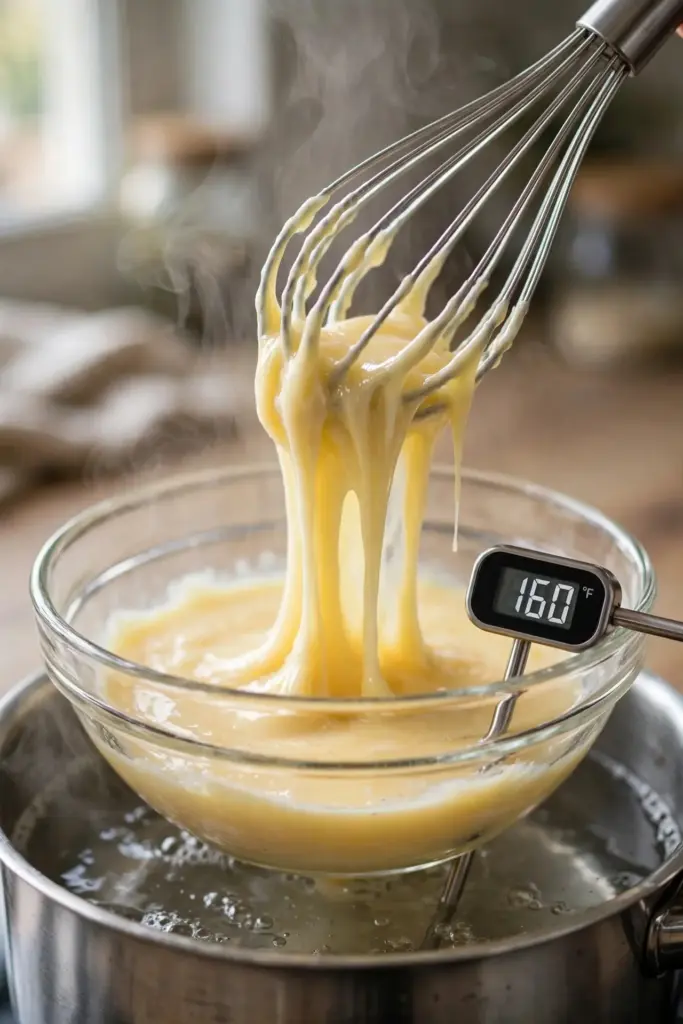
- Set a heatproof bowl over a saucepan of gently simmering water, making sure the bowl doesn’t touch the water. Add the egg yolks, sugar, and 3 tablespoons of water, and whisk constantly. Cook until the mixture is pale, thickened, and reaches 160°F on a thermometer, about 5 to 7 minutes. Food-safety guidance from the USDA recommends heating egg-yolk mixtures to at least 160°F to reduce the risk of salmonella, and this is also the point where the cream will hold its shape rather than run.
- Remove the bowl from the heat and let the yolk mixture cool for 5 minutes, whisking occasionally so it doesn’t set unevenly at the edges.
- Add the mascarpone to the cooled yolk mixture and whisk until smooth, with no visible lumps. Why this works: mixing it in while the yolks are still warm but not hot keeps the mascarpone from seizing, which is what causes a grainy cream.
- In a separate bowl, whip the cold heavy cream with the vanilla and salt to soft peaks, where the cream holds a shape but the peak still droops slightly when you lift the whisk.
- Fold the whipped cream into the mascarpone mixture in two additions, using a spatula and a gentle over-and-under motion. Stop once no white streaks remain. Why this works: folding rather than stirring keeps the air in the whipped cream, which is what gives the finished layer its lightness.
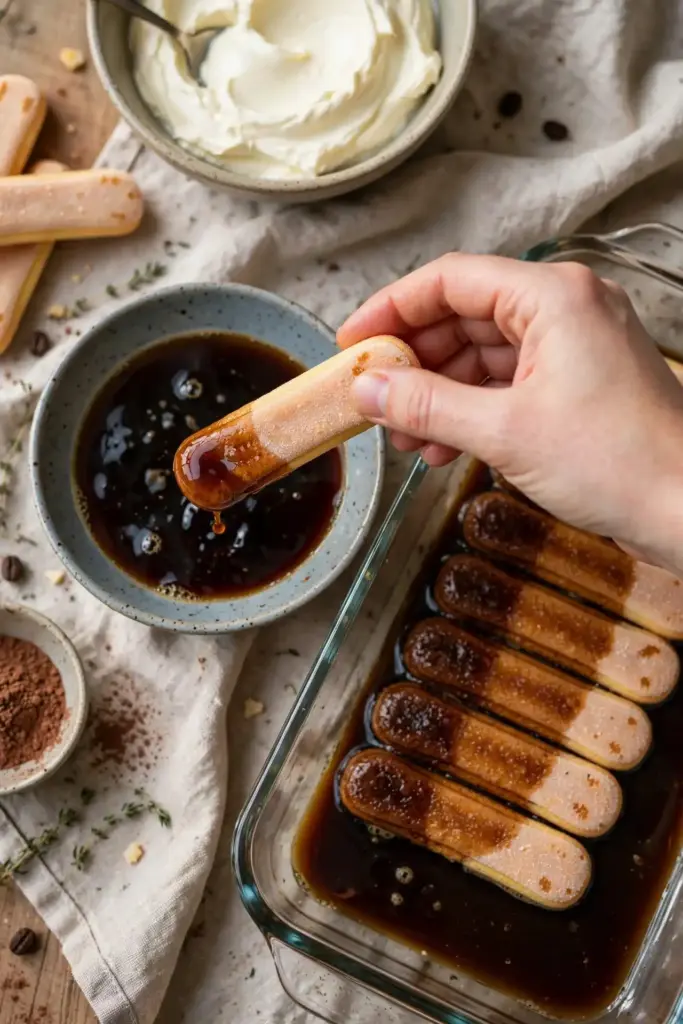
- Dip each ladyfinger into the coffee mixture for about 1 second per side, no longer. Arrange a tight single layer in the bottom of a 9×13-inch dish. Why this works: a quick dip lets the biscuit take on coffee flavor while staying firm enough to hold its shape under the cream.
- Spread half of the mascarpone cream over the ladyfingers in an even layer, smoothing it with an offset spatula.
- Repeat with a second layer of dipped ladyfingers, then the remaining cream, smoothing the top.
- Cover and refrigerate for at least 6 hours, or overnight. The cream should feel fully set, not soft, when you press it gently through the plastic wrap.
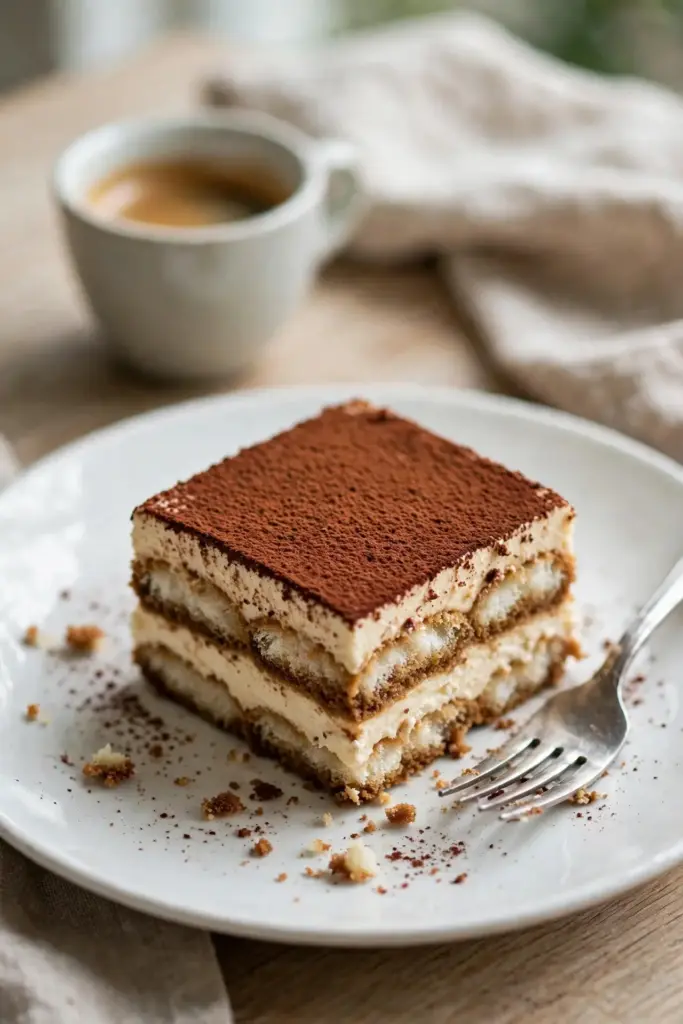
- Just before serving, dust the top evenly with cocoa powder and add chocolate shavings if using. Slice into 9 squares.
Key Tips
- Measure the mascarpone’s temperature by feel, not the clock. It should be cool, not cold from the fridge and not soft at room temperature. Either extreme makes the cream harder to fold smoothly.
- If you don’t have a thermometer, watch for the ribbon test instead: lift the whisk, and if the yolk mixture falls back into the bowl in a ribbon that holds its shape on the surface for a few seconds, it’s ready.
- Buy the dry, hard savoiardi ladyfingers, not the softer cake-like ones sold near the bakery section. The dry kind is what’s designed to absorb liquid without falling apart.
- Slice with a knife dipped in hot water and wiped dry between cuts. Cold cream and cocoa dust otherwise smear across clean layers.
Common Mistakes and Troubleshooting
- Soggy or mushy ladyfingers. This almost always means they were soaked instead of dipped. Dip for one second per side, not a slow count of five.
- Grainy or curdled mascarpone cream. Usually caused by mascarpone that was too cold when it met the warm yolk mixture, or cream that was whipped past soft peaks before folding. Bring the mascarpone to cool room temperature first, and stop whipping the cream while it’s still soft.
- Runny or weepy tiramisu when you slice it. The cream hasn’t fully set. Give it the full 6 hours, and don’t rush it by serving straight from a short chill.
- Flat, weak coffee flavor. This is usually drip coffee standing in for espresso. Use real espresso, or strong instant espresso powder dissolved in hot water, for a flavor that actually comes through the cream.
Variations
- Coffee liqueur tiramisu. Swap the Marsala for coffee liqueur to push the flavor further toward coffee and away from wine.
- Alcohol-free tiramisu. Skip the wine entirely and add the extra vanilla noted in Substitutions. The dessert holds up fine without it.
- Strawberry tiramisu. Replace the coffee soak with a mix of strawberry puree and a squeeze of lemon juice, layer sliced strawberries between the cream, and skip the cocoa dusting in favor of white chocolate shavings.
- Individual tiramisu cups. Build the same layers in small glasses or jars for portioned, easy-to-serve desserts at a party. Chilling time stays the same.
Serving Suggestions
- A small cup of espresso alongside, which is closer to how it’s served in Italy than a big dessert plate is.
- Fresh berries on the side to cut the richness of the cream.
- After a red-sauce Italian meal. [Link to your Pasta category hub with anchor text like “your favorite Italian mains”]
- On a holiday dessert table next to other make-ahead sweets. [Link to your Desserts category hub with anchor text like “more make-ahead desserts”]
- With a dusting of extra cocoa and a few coffee beans on top for a dinner party presentation.
Storage, Reheating, and Make-Ahead
- Storage. Cover tightly and refrigerate for up to 3 days. It’s best within the first 2 days, before the ladyfingers soften further.
- Freezing. Not recommended. The mascarpone and cream separate on thawing, and the texture turns grainy and watery rather than smooth.
- Make-ahead. This is genuinely a make-ahead dessert. Build it up to 24 hours before serving and keep it covered in the fridge. Add the cocoa dusting right before serving, not earlier, since it goes damp and dull if it sits on the cream too long.
Nutrition Information
Per serving (based on 9 servings):
- Calories: 380
- Protein: 6g
- Carbohydrates: 27g
- Fat: 27g
- Fiber: 1g
- Sugar: 18g
- Sodium: 55mg
These are estimates calculated from typical ingredient values. Actual numbers vary with brands, cuts, and portion size, and readers tracking intake closely should calculate their own.
Frequently Asked Questions
Does this recipe have raw eggs? No. The egg yolks are cooked over a double boiler to at least 160°F before they’re mixed with the mascarpone, which is the temperature food-safety guidance points to for reducing salmonella risk in egg mixtures like this one.
Can I make tiramisu ahead of time? Yes, and it’s better for it. Build the full dessert up to 24 hours ahead, keep it covered in the fridge, and add the cocoa dusting just before serving.
Why is my tiramisu soggy? The most common cause is dipping the ladyfingers too long. A one-second dip per side is enough. If they sit in the coffee for several seconds, they absorb too much liquid and fall apart under the cream.
What can I use instead of Marsala wine? Coffee liqueur or dark rum both work as a direct swap. For an alcohol-free version, skip it and add a little extra vanilla to the coffee instead, rather than just using more coffee.
Can I substitute the mascarpone? Not without changing the dessert. A whipped mix of cream cheese and heavy cream comes closest, but it’s tangier and denser than mascarpone, so expect a different result, not a copy.
How long does tiramisu keep in the fridge? Up to 3 days, covered. It’s at its best in the first 2 days.
Does this recipe work with a gluten allergy? It can, using gluten-free ladyfingers, which a few brands make as a direct swap for the traditional ones. The rest of the recipe doesn’t need any changes.
Conclusion
The part of tiramisu that actually needs attention is the egg yolk step: cook it to the right temperature, cool it before adding the mascarpone, and the rest of the dish comes together with basic dipping and layering. Give it the full chilling time before you slice into it. That’s what turns a bowl of mascarpone cream and coffee-soaked biscuits into a tiramisu recipe that holds its layers.
Classic Tiramisu Recipe
Ingredients
Equipment
Method
- Combine the coffee and Marsala (or your alcohol-free substitute) in a shallow dish wide enough to dip a whole ladyfinger. If you are not using alcohol, add 1 teaspoon vanilla extract or 1/2 teaspoon rum extract — rum extract gives you the warm flavor without the alcohol.
- Set a heatproof bowl over a saucepan of gently simmering water, making sure the bowl doesn’t touch the water. In the bowl, whisk the yolks, sugar, and water. Cook, whisking constantly, for 7 to 9 minutes until the mixture reaches 160°F / 71°C and thickens enough to coat the back of a spoon.
- Remove the bowl from the heat and let the yolk mixture cool for 5 minutes, whisking occasionally so it doesn’t form a skin.
- Add the mascarpone to the cooled yolk mixture and whisk until smooth, with no visible lumps.
- In a separate bowl, whip the cold heavy cream with the vanilla and salt to soft peaks, where the cream holds its shape when you lift the whisk. Start on low speed, then increase it — moving too fast splatters the cream and over-whips it before it thickens.
- Fold the whipped cream into the mascarpone mixture in two additions, using a spatula and a gentle over-under motion. Stop as soon as there are no white streaks left — over-folding deflates the cream.
- Dip each ladyfinger into the coffee mixture for about 1 second per side, no longer. Arrange a tight layer of dipped ladyfingers in a 9×13-inch baking dish, breaking them to fill any gaps.
- Spread half of the mascarpone cream over the ladyfingers in an even layer, smoothing it with an offset spatula. Take your time, because the whipped cream makes the layer delicate, so you want to avoid tearing the ladyfingers as you spread.
- Repeat with a second layer of dipped ladyfingers, then the remaining cream, smoothing the top.
- Cover and refrigerate for at least 6 hours, or overnight. The cream should feel fully set, not soft, before you slice.
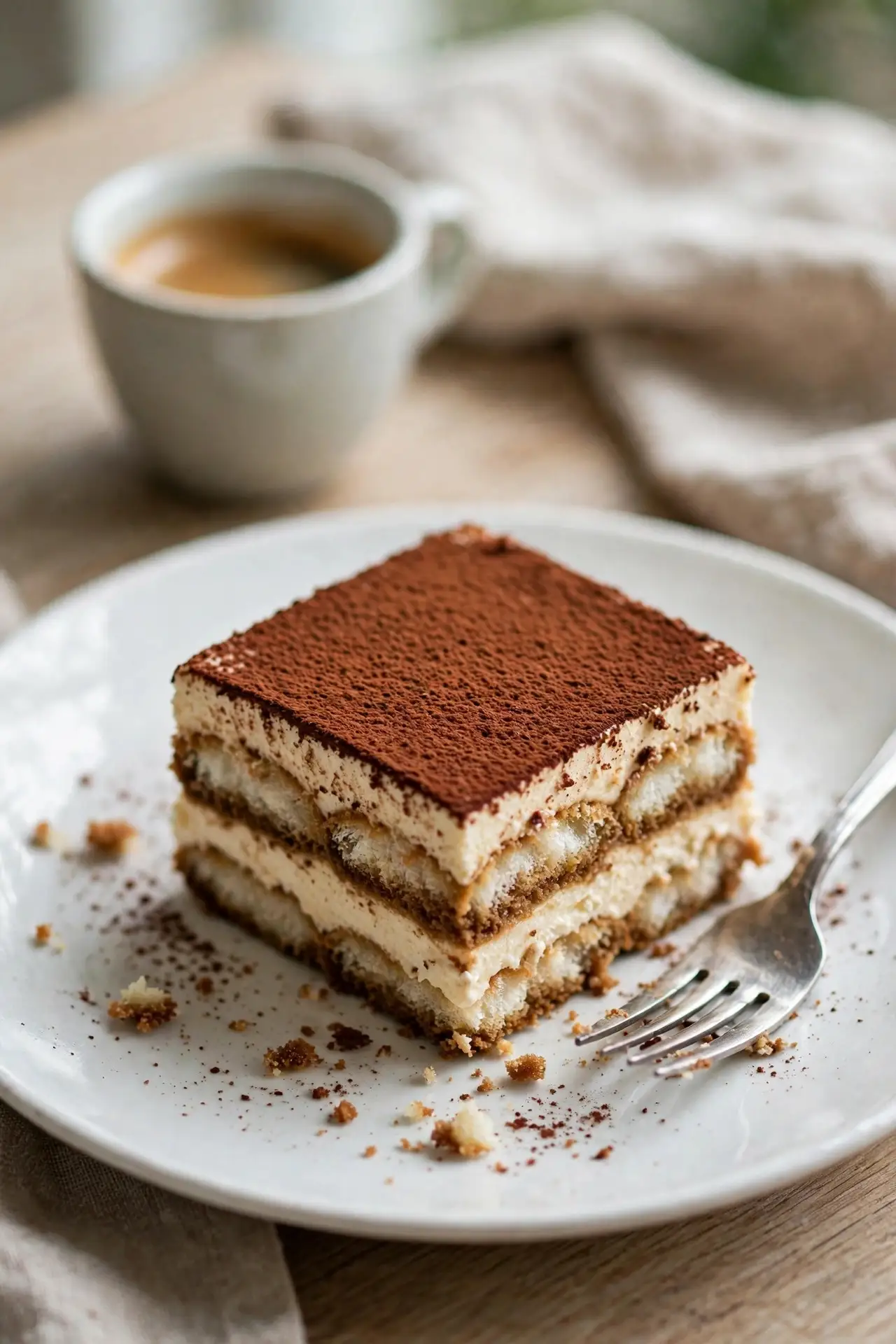
- Just before serving, dust the top evenly with cocoa powder and add chocolate shavings if using. Slice with a sharp knife, wiping the blade clean between cuts for the neatest slices.